
By Sta
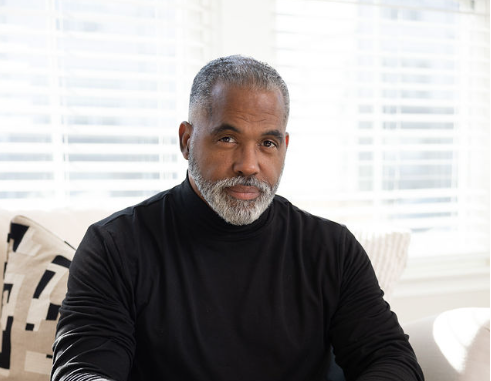
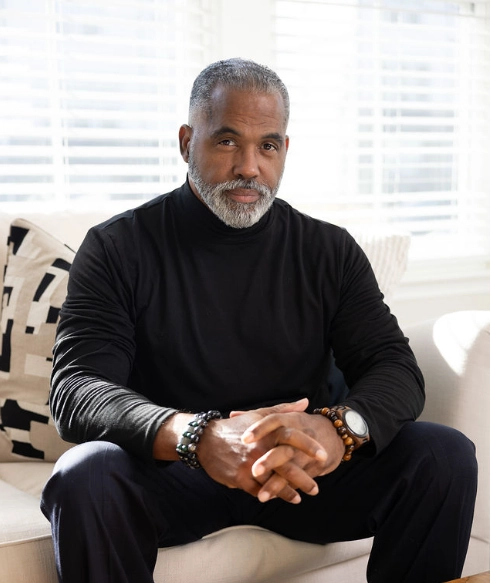
Wade Younger stands at the forefront of a global shift in how organizations understand intelligence, innovation, and change. As a pioneering strategist, enterprise advisor, keynote speaker, and architect of intelligent transformation, he has helped leaders across industries move beyond the hype of AI and confront the deeper question of what their organizations must become in order to thrive. For Wade, intelligent transformation is not about adopting tools—it is about reshaping mindsets, redesigning systems, and rebuilding the very foundations of how companies create value. With more than three decades leading high-impact consulting firms, advising Fortune 500 companies, and training executives around the world, Wade brings a rare combination of narrative clarity, operational discipline, and human-centered insight. He challenges leaders to rethink their assumptions, confront organizational friction with honesty, and build cultures where human judgment and machine intelligence elevate one another. His work, his frameworks, and his new book The Bionic Company all signal the same truth: the future does not belong to organizations that automate. It belongs to those that evolve—intelligently, responsibly, and with purpose.
How do you define “intelligent transformation,” and why is it more than just adopting AI tools or automating workflows?
Intelligent transformation, the way I define it, is the moment an organization decides to stop decorating the old house and finally rebuild the foundation. It is not about plugging in AI tools or putting automation on top of legacy thinking. It is the shift that happens when leaders recognize that the real value of AI is not in the technology itself, but in what it forces us to rethink about how we work, how we create value, and how we serve people. Intelligent transformation is a mindset before it is a mechanism. It is a willingness to question assumptions that have gone unchallenged for years and to design a new operating rhythm where human judgment and machine intelligence complement each other instead of competing for space.
When you approach it this way, you begin to see that adopting tools is the smallest part of the journey. Anyone can buy software. The real work is designing the culture, the workflows, the data discipline, and the behavior change that allow those tools to produce outcomes. Intelligent transformation requires you to understand where the friction lives, where time leaks out of the organization, where customers are forced to wait, and where employees are stuck doing work that adds no strategic value. Once you see those things clearly, AI becomes a strategic lever instead of a shiny object.
This is why I always say intelligent transformation is a leadership decision, not a technical one. It asks leaders to build systems that are responsive, not reactive. It demands clarity on the value you are trying to create and the experience you want people to have. And it calls for a level of courage, because real transformation changes power structures, workflows, and habits. When organizations embrace this kind of thinking, they do more than automate. They elevate. They become faster, smarter, more capable, and more resilient. They do not just use AI. They evolve because of it.
Many leaders understand AI conceptually but struggle with implementation. What do you see as the biggest disconnect between AI awareness and AI execution in organizations today?
The biggest disconnect I see between AI awareness and AI execution is that many leaders treat AI as an idea instead of treating it as a discipline. They can articulate the promise of AI, they can repeat the headlines, and they can even picture the future. What they often cannot do is translate that vision into the day-to-day decisions, behaviors, and operating models required to make AI real. Awareness sits in the clouds. Execution lives in the dirt. And most organizations have not yet built the muscles to bridge those two worlds.
Leaders think they have an AI strategy because they bought a platform or assigned a task force. What they really have is an ambition without architecture. The hard work begins when you slow down enough to understand the workflow, the data, the value logic, the risk posture, and the human impact of every AI decision. That is where the real disconnect shows up. Leaders talk about AI like it is magic. Operative organizations need AI to be math. They need clarity, sequence, and governance. They need a way to move from idea to outcome in a predictable way.
In my experience, the organizations that get stuck are not missing intelligence. They are missing alignment. They have people who are aware of AI but not accountable to its execution. They have enthusiasm without ownership. They have vision without a playbook. When that gap exists, AI becomes a slide in a presentation instead of a capability embedded in the business.
The future belongs to the organizations that treat AI the same way they treat finance, operations, compliance, and culture. Something you practice. Something you refine. Something you lead with intention. Awareness can start the conversation. Execution is what transforms the organization.
Your work spans federal, healthcare, industrial, security, and financial sectors. What patterns have you noticed about which organizations adapt to AI successfully and which ones stall?
Across every sector I touch, from federal to healthcare to industrial operations and security, the same pattern repeats itself. The organizations that adapt to AI successfully are the ones that treat change as a muscle, not a moment. They are not necessarily the most well-funded or the most technically sophisticated. They are the ones that are intellectually honest about where they are, courageous about where they need to go, and disciplined about how they get there. They do not romanticize AI. They operationalize it. They understand that AI is not here to impress them. It is here to expose them. It reveals every weakness in process, culture, leadership, and data hygiene. And the winners are the ones willing to look at that exposure and do something about it.
The organizations that stall almost always share a different pattern. They want the benefits of AI without the discomfort of transformation. They want automation without introspection. They want scale without structure. These are the teams that try to bolt AI onto a broken workflow and then wonder why nothing changes. They underestimate the cultural lift required. They overestimate their readiness. And they treat AI like an accessory instead of a strategy. What happens next is predictable. Meetings multiply. ROI evaporates. Excitement turns to frustration. And leadership retreats into “wait and see” mode while their competitors quietly move ahead.
The organizations that succeed also understand something subtle but powerful. They know AI is not a technology project. It is a story about who they are becoming. They create space for experimentation. They give people permission to learn. They build governance that guides without suffocating. And they are clear about the value they want to create: faster service, better experience, reduced friction, new revenue, less operational drag. Once that clarity exists, AI becomes a catalyst instead of a complication.
In every industry, the dividing line is not budget or talent. It is appetite. Organizations with an appetite for truth, alignment, and disciplined execution move forward. The ones that cling to old patterns stay exactly where they are, no matter how many tools they purchase.
You’ve guided executive teams through major enterprise change. What are the hallmark traits of leaders who are truly prepared for an AI-driven future?
The leaders who are truly prepared for an AI-driven future carry a very different posture than the ones who are simply trying to survive it. They are not obsessed with the tools. They are obsessed with the truth. They want to understand how their business actually works, where the friction really lives, and what assumptions have quietly shaped their culture for years. Those leaders are not intimidated by what AI reveals. They welcome it, because clarity gives them leverage. They know that AI does not change an organization as much as it exposes it, and they are willing to confront what they see.
Another hallmark trait is their ability to think in systems instead of silos. They understand that AI is a connective force. It touches workflows, people, data, incentives, governance, and customer experience all at once. So these leaders resist the urge to chase isolated wins or pilot projects that never scale. They build alignment, sequence, and accountability. They make sure the architecture is clear before the technology is deployed because they know execution does not collapse from lack of intelligence but from lack of integration.
The most prepared leaders are also deeply human in their approach. They see AI as a force multiplier for people, not a replacement for them. They invest in education, not just enablement. They talk openly about the fear, curiosity, and opportunity that AI brings. They do not hide behind jargon. They make AI approachable. And because their teams feel safe to learn, the organization accelerates rather than resists.
Finally, the leaders who thrive in an AI-driven future have a bias toward movement. They do not wait for perfect data, perfect governance, or perfect conditions. They move, measure, refine, and scale. They treat AI the way great athletes treat training. Daily. Intentional. Iterative. They understand that the future will not be kind to organizations that admire the problem. It will reward the ones who build the muscle.
With over 2,000 keynotes delivered, how do you translate complex AI concepts into messages that resonate emotionally and inspire action across diverse audiences?
First and foremost, my story telling abilities come for my father. He was a master at it. The timing, the left turns mid story and the punch lines. He had it all. So when I step onto a stage, my goal is never to impress people with how much I know about AI. My goal is to make them feel something about their own future. The truth is, most audiences do not struggle with understanding the technology. They struggle with understanding what the technology means for them, for their work, for their families, and for their sense of relevance in a changing world. So I translate complex AI concepts by grounding them in human stories, real moments of friction, and the universal desire to matter. I never start with the algorithm. I start with the human condition.
I take what feels abstract and make it tangible. I turn ideas into imagery. I talk about the feeling of standing at a crossroads when the future is no longer a distant horizon but a present force knocking at your door. I show them that AI is not just reshaping industries but redefining what it means to lead, to serve, to create value, and to stay ahead of disruption.
When people can see themselves inside the story, the technology becomes less intimidating and more empowering. They begin to understand that AI is not something happening to them. It is something they can shape.
I also speak with a certain honesty that people can feel. I acknowledge the fear. I acknowledge the fatigue. I acknowledge the skepticism. And then I show them the opportunity on the other side of that tension. The goal is to turn anxiety into agency. To help them realize that the future is not waiting for the perfect organization. It is waiting for the willing one. The room starts to shift when people recognize that AI is not a threat but an invitation.
Across every industry and every audience, the message lands when you connect intelligence with identity and innovation with humanity. That is how you move people from awareness to action. That is how you take something as complex as AI and make it personal enough for someone to change the way they think, work, and lead.
As governance, ethics, and responsible AI gain urgency, what frameworks or practices do you believe every organization should implement right now to build trust and reduce risk?
When I talk about responsible AI, I am really talking about organizational maturity. Not technical maturity. Human maturity. The ability to slow the pace just enough to ensure that the intelligence you deploy does not outrun the ethics you claim to stand on. Every organization wants the benefits of AI, but very few are prepared for the accountability that comes with it. And trust is not built on intentions. Trust is built on structure.
The first practice every organization should put in place is a clear decision-making framework for AI. Not a binder on a shelf. A living process. A structure that forces teams to articulate the problem, validate the data, identify who is impacted, and define who is accountable. When this discipline is missing, AI becomes a free for all. When it exists, risk becomes manageable, value becomes measurable, and leadership gains real visibility into what is happening under the hood.
Second, organizations need a responsible AI charter that is actually understandable. Not legal jargon. Not pages of compliance language. A simple, accessible set of principles that tell people how to think, how to question, how to escalate concerns, and how to act when something does not feel right. Because the truth is, most AI failures are not technical failures. They are ethical blind spots and cultural gaps. When people know the principles, they can spot the danger before it becomes the headline.
Third, every organization should implement a model monitoring practice that functions the same way a doctor monitors vital signs. Not just before deployment but throughout the lifecycle. Bias shifts. Data drifts. Workflows change. And if no one is watching, an organization can lose control without realizing it. Continuous monitoring is not about policing. It is about stewardship. You cannot govern what you do not measure.
Finally, and this is the piece that organizations underestimate, you must create a culture where people feel safe to question the machine. AI is powerful, but it is not infallible. The most responsible organizations train their people to think critically, challenge outputs, flag anomalies, and raise their hand when something looks off. That is not resistance. That is wisdom. That is how you prevent harm and protect trust.
Responsible AI is not a checkbox. It is a posture. It is a commitment to clarity, accountability, transparency, and continual learning. When organizations build these practices, they do more than reduce risk. They earn the permission to innovate at scale. They earn trust. And trust is the real currency of the AI era.
In your experience as a lecturer and advisor, what misconceptions about AI most hinder progress—and how do you help leaders break through them?
The misconception that causes the most damage is the belief that AI is either a miracle or a menace. Leaders tend to fall into one of those two extremes. Some walk into the room expecting AI to instantly fix everything that has been broken for years. Others enter convinced that AI is here to replace their people, erode their culture, or undermine their control. Both mindsets create paralysis. When you see AI as magic, you chase hype and skip the fundamentals. When you see AI as a threat, you avoid the very conversations that would prepare your organization for the future. In both cases, progress stalls because the narrative is distorted from the beginning.
Another barrier is the assumption that AI is a technical journey instead of a business transformation. Leaders often say, “We need AI,” as if the technology itself is the strategy. They believe the tool will produce the outcome. What they overlook is the architecture of execution, the data discipline, the workflow redesign, the governance, the accountability, the financial validation, and the human adoption. Without that structure, AI becomes a patch on an outdated system rather than a catalyst for a new one. And when leaders do not understand this, they treat AI as an accessory rather than a change in how the organization thinks and operates.
There is also a subtle misconception that progress must wait for perfection. Leaders believe they need pristine data, flawless governance, or a fully staffed AI team before they can begin. That mindset kills momentum. AI does not reward hesitation. It rewards clarity and iteration. You start with what you have, you learn, you refine, and you scale. Waiting for ideal conditions is simply another way of avoiding uncomfortable decisions.
When I work with leaders, my first step is to reset the narrative. I strip away the mythology and focus on truth. I help them see AI as a strategic force that amplifies good decisions and exposes bad ones. I show them that the goal is not to automate everything but to elevate the business, save time, save money, make money, and relieve stress. Then I give them a playbook. Something they can feel in their hands. Clear stages, clear gates, clear ownership, clear value.
Most importantly, I help them reconnect AI with their identity as leaders. Because once they stop seeing AI as a threat to their relevance and start seeing it as an extension of their leadership, everything changes. Curiosity replaces fear. Discipline replaces confusion. And progress finally becomes possible.
This is the sole reason why I created the AI Mindshift Accelerator. www.AIMindShift.ai
Looking ahead, what emerging capabilities or shifts in AI do you believe will redefine intelligent leadership and competitive advantage over the next decade?
When I look ahead, I see AI reshaping leadership in a way that goes far beyond efficiency or automation. It is altering the very architecture of how companies think, move, and compete. The next decade will reward leaders who understand that intelligence is no longer confined to people or machines alone, but in the relationship between the two. Leadership becomes less about directing activity and more about orchestrating an environment where human capability and machine capability elevate each other. The leaders who embrace that shift will operate with a level of clarity, speed, and adaptability that others simply cannot match.
AI will introduce a new class of autonomous decision systems that sense tension in the business before leaders even articulate the problem. These systems will surface risks, identify opportunities, and generate pathways forward in real time. The competitive advantage will not come from the technology itself. It will come from the leader who knows how to challenge the system, validate the logic, and act decisively on what the intelligence reveals. The organizations that excel will treat AI as strategic infrastructure, not as an experiment. They will build literacy at every level, cultivate cultures where questioning the machine is encouraged, and integrate AI into their operating rhythm the same way they once integrated finance, safety, or quality.
The workforce will evolve just as quickly. Roles will shift from task execution to outcome stewardship. People will spend less time carrying the weight of routine work and more time managing exceptions, strengthening relationships, and solving meaningful problems. Organizations that prepare their people for that transition through upskilling, psychological safety, and clear communication will attract and retain talent. Those that do not will face a widening capability gap that no tool can fix.
And this is where the intent behind my new book, ‘The Bionic Company’ comes in. The book is not about technology for technology’s sake. It is about helping leaders understand that tomorrow’s organizations will operate as hybrid systems where talent, culture, intelligence, and technology function as one integrated organism. Bionic companies are not defined by the tools they adopt but by the way they design themselves to learn, sense, adapt, and scale intelligence across every part of the enterprise. They move differently. They decide differently. They serve differently. And they create advantage in ways traditional structures cannot replicate.
In the end, the real shift will be this: competitive advantage will belong to the organizations that develop the maturity to use intelligence responsibly, the courage to rethink how value is created, and the humility to let technology expand what their people are capable of. Those are the leaders who will not just navigate the next decade. They will define it.

Social Media
https://www.linkedin.com/in/wadeyounger
https://www.facebook.com/wade.younger
https://www.instagram.com/wadeyounger
About

Wade Younger’s journey as a leader and architect of intelligent transformation began in 1990, when he founded Fruition Consulting. What started as a vision to bring high-value technology services to enterprises rapidly grew into a national consulting firm specializing in IT project management, change management, and strategic planning. Under Wade’s leadership, Fruition Consulting expanded to more than 200 employees across multiple locations. After sixteen years of growth and impact, Wade sold the company in 2006.
In 2010, Wade founded The Value Wave, an advisory firm built for small and mid-cap companies seeking the methodology, discipline, and toolsets of top-tier consultancies, delivered the same level of execution excellence found in major firms, helping organizations improve operations, sharpen strategy, and position themselves for accelerated growth, but at a more accessible price point.
Following this, Wade served as Chief Operating Officer for a technology company specializing in artificial intelligence, blockchain solutions, and virtual reality applications. This role expanded his reach into emerging technologies and deepened his expertise in digital transformation at scale.
Throughout all of these chapters, Wade continued a parallel path as a global keynote speaker, lecturer, and author. As a TEDx speaker with more than 2,000 keynotes delivered worldwide and recurring guest lectures at Cornell University, he established himself as a leading voice on leadership development, workforce culture, organizational change, and, for the past several years, the strategic impact of artificial intelligence. His books have guided leaders through change, uncertainty, innovation, and now the rising era of intelligent work.
In more recent years, Wade shifted his full focus into AI strategy, governance, and enterprise transformation. He served in AI advisory and AI implementation leadership roles for Fortune 500 companies, helping major organizations build responsible use cases, operationalize AI safely, and deploy intelligence that delivers measurable ROI, resilience, and human impact.
Wade is the founder and practitioner behind the AI MindShift Accelerator, a structured, end-to-end framework that guides organizations from early AI curiosity to full-scale intelligent transformation.
In 2025, Wade became CEO of SecureTelligence, a next-generation cybersecurity and AI intelligence company with patented technology designed to protect AI systems, safeguard intellectual property, and secure machine-to-machine communication.
Beginning in January 2026, Wade will serve as Chief AI Officer for Power Personnel, one of the fastest-growing staffing and workforce solutions companies in the world. Power Personnel added the AI MindShift Accelerator as a strategic consultancy, with Wade leading the firm’s integration of AI across talent management, staffing operations, and workforce innovation.
His most recent book, The Bionic Company, captures the essence of this moment in history. It explores how AI, intelligent systems, and rapid innovation are reshaping industries, workforces, and the future of organizational design. The book offers leaders a roadmap for building companies that are not just efficient or automated, but adaptive, resilient, and truly bionic.
Wade Younger is not simply witnessing the age of intelligent transformation, he is helping leaders shape it.
About The Author