
By Staff
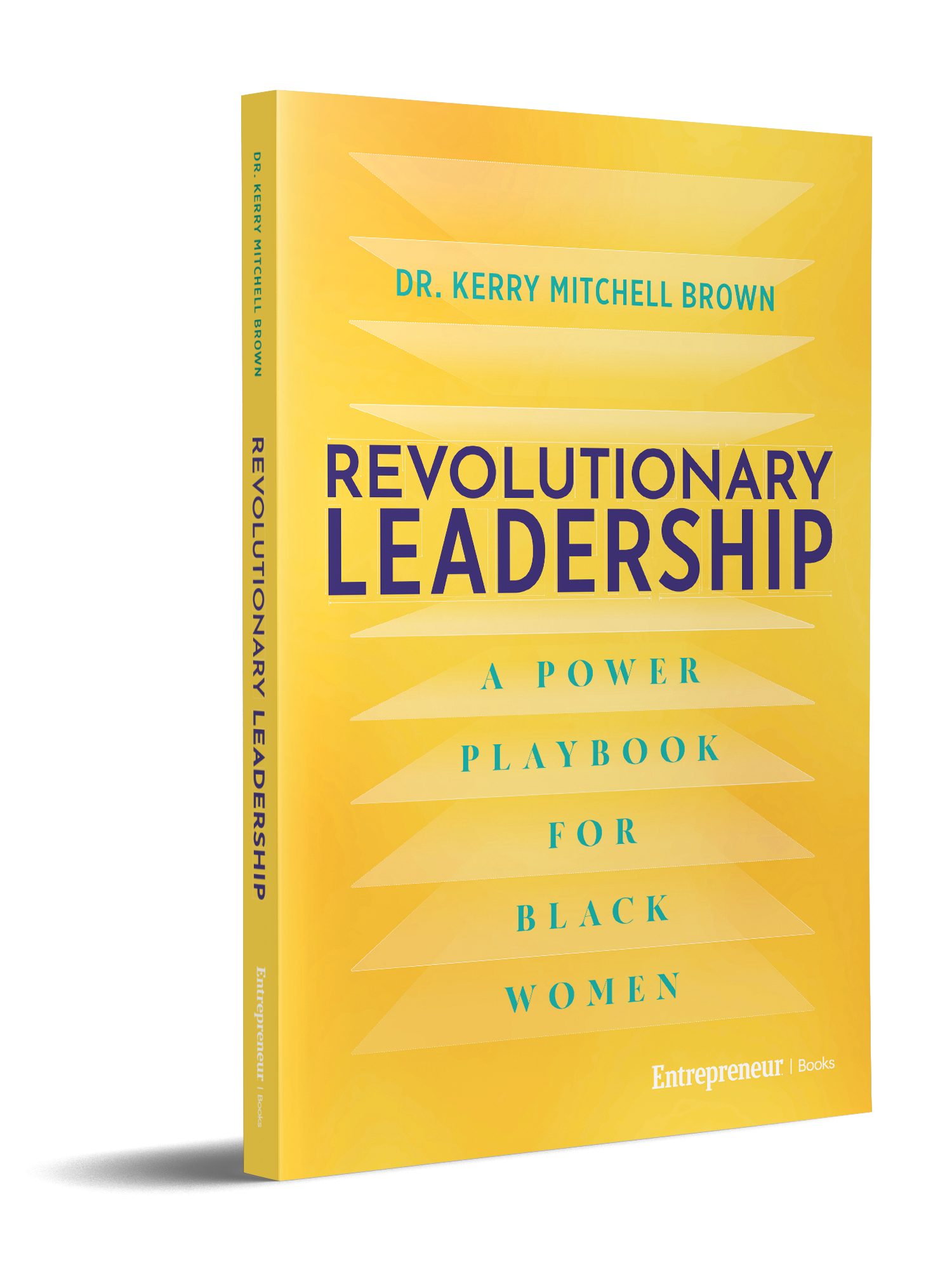
Author, Revolutionary Leadership: A Power Playbook for Black Women
What inspired you to write Revolutionary Leadership: A Power Playbook for Black Women, and why was this the right moment to document the leadership wisdom Black women have cultivated across generations?
A consultant stood at the front of a conference room and presented care, community, and collective problem-solving as the future of leadership. The executives wrote it down like scripture.
I had watched Black women lead exactly that way my entire career. Nobody wrote us down.
That gap is the book. Not resentment. Correction. We built these models. We proved they work, in the hardest conditions, without recognition or resources. And the field is only now arriving where we already stood.
I spent 20 years on the research. Two studies, more than 600 women. I spent 30 more inside organizations watching the same truth hold. What the data named, we had already lived. Care is a competency, not a soft skill. Community is infrastructure, not sentiment. Well-being is an outcome you design for, not a prize you earn after you break.
This book is written for Black women, fully and without apology. And here is the part people miss. Because we developed the most effective leadership under the most punishing conditions, anyone serious about leading well has something to learn from it. That is not widening the audience. That is naming the source. The moment is now because the world finally wants what we perfected, and I wrote the book so they reach for it at the origin. We are not waiting to be validated. We are the validators.
You often say that Black women have been practicing revolutionary leadership long before institutions recognized their contributions. How has history shaped your understanding of what authentic leadership truly looks like?
Harriet Tubman built and ran a covert extraction network inside a system engineered to kill her. A bounty on her head. No map, no budget, no room for a single error. She made nineteen trips and never lost a passenger.
Study that as operations and you are looking at one of the finest strategic minds this country ever produced.
History handed her to us as a brave and gentle mother figure. That is a demotion. She was a logistician, an intelligence operator, a systems architect working under a death sentence. We mistake her warmth for the whole story and miss the genius running underneath.
That is what history taught me about authentic leadership. It rarely looks like the version on the magazine cover. It looks like a woman engineering a way through a system built to end her, and building it so well that it holds.
We were never following anyone’s model. We were the model. Everyone else is reading our work.
Your work challenges the notion that success requires validation from mainstream institutions. What does it mean for Black women to reclaim ownership of their own narratives, and why is that act so transformative?
I meet women who have collected every credential and still feel they are waiting for a door to open. They did everything the story told them to do. And the door stayed shut.
Here is what I tell them. You are not waiting for the system to recognize you. You are the one who decides what counts.
Reclaiming the narrative is the shift from being a subject inside someone else’s structure to being the architect of your own. A subject asks whether the room approves. An architect draws a new room. My research and my thirty years say the same thing. The women who transform their circumstances stop auditioning and start authoring.
It is transformative because the audition never ends. There is always one more level of approval to chase. The moment you stop asking permission, you get all your energy back, and you point it at what you are building instead of who you are convincing.
We are not seeking a seat at their table. We are setting our own.
Your podcast, Revolutionary Leadership, has become a platform for elevating the voices and experiences of Black women. What have been some of the most profound lessons you’ve learned through those conversations, and how have they influenced your own leadership journey?
Guest after guest opened with the same quiet line. I figured this out on my own. I never thought it mattered to anyone else.
Every time, I heard the real story underneath. It mattered enormously. And she was almost never the only one who knew it.
That is the lesson that reshaped me. Our knowledge has always been brilliant and always been scattered. Held in isolation, passed in whispers, lost the moment a woman leaves the room. We have been carrying blueprints and treating them like private notes.
Community is not the warm part of this work. It is the infrastructure. When one woman’s hard-won strategy becomes shared knowledge, none of us has to start from zero again.
So I lead differently now. I stopped performing the expert at the front of the room. The show says it plainly. Black women’s stories become tomorrow’s blueprints. I am not the authority speaking down. I am the one making sure we finally write it all down, and keep it.
You describe leadership as something that was nurtured in church basements, living rooms, kitchens, and community spaces. How can today’s leaders preserve that cultural legacy while navigating corporate boardrooms, entrepreneurship, and public service?
A client of mine could not get into the golf games and late dinners where the decisions really happened. So she built her own room. She started hosting breakfast, open to everyone, the analysts and assistants alongside the executives.
Her peers thought she was wasting her time on people who could not lift her career.
Inside two years her breakfast table had become the network that actually ran the company, and she had the vice president title to show for it.
She did not learn that in any leadership seminar. She brought it from the church basement and the kitchen table, where Black women have built real infrastructure for generations. What corporations now sell as inclusive leadership, we developed as a way of life. That is why this legacy belongs at the center of the conversation, not the margins. Every leader who wants to build something that lasts is studying what we already know.
You preserve it by refusing to leave it at the door. The pressure will tell you to shed where you come from to fit where you are going. Do the opposite. Carry the model in with you. It was always the more sophisticated one.
As you embark on a national book tour, what conversations do you hope to spark in communities across the country, and what lasting impact would you like readers to carry with them after experiencing your message?
I am taking this book on the road at a moment when Black women are being cut first and funded last. Layoffs that hit us hardest. Programs built for us quietly defunded. A public message, rarely said out loud but felt everywhere, that we do not matter as much.
And laid on top of that, something many of us watched happen in the open. The most prepared woman in the room, credentialed beyond question, ready for every version of the role, meeting a door that still would not open. We have lived that in our own careers for years. Watching it play out on the largest possible stage confirmed an old truth in public, and the confirmation compounded the exhaustion.
I want to walk into every city and tell the truth about all of it. It is not a verdict on your worth. It is a spotlight on theirs.
Here is the contradiction I want each room to sit with. The same institutions withdrawing their investment in us are, at the same time, adopting the exact leadership we invented. They want the methods and they are discarding the authors. That is not us failing to matter. That is them failing to recognize the source while they copy the work.
So the conversation I am after is about where we put our energy now. My research on collective success is clear. We go further through shared power than through solo climbing. When the institutions withdraw, the answer was never to climb harder alone. It is to turn toward each other and build what they refuse to fund.
What I want readers to carry is steady. Your preparation was never the thing that fell short. The door was built to stay closed, and that is information about the door, not about you. No layoff, no rollback, no closed door can revoke what you already are, or take back the blueprint that lives in you.
Your career spans executive leadership, consulting, authorship, and media. How have these diverse experiences shaped your approach to mentoring the next generation of Black women leaders who are determined to create lasting change?
I have held executive seats inside major institutions and advised more than 247 organizations across nearly every industry. I have been the only Black woman in the room more times than I can count, and I learned to read those rooms fast.
Every seat taught me the same thing from a different angle. The rules we are handed are almost never the rules that actually govern.
So I refuse to mentor from the official playbook. I give younger women the real one. What genuinely moves a career. What proximity is worth more than another credential. And the permission most of us were never given, to protect their own well-being instead of sacrificing it for a system that will not say thank you.
I will not let them start from zero the way we did. That is the entire point of the work. My experience becomes her shortcut. Her wisdom becomes the next woman’s foundation. We stop rediscovering the same fire and start building on it. That is how a lineage compounds instead of resetting.
Heart & Soul Magazine celebrates individuals who inspire purpose, resilience, and transformation. What message would you like every reader, especially Black women who are questioning their own power, to embrace after reading Revolutionary Leadership?
If you are questioning your power right now, maybe because the job ended, or the funding vanished, or the door you earned closed anyway, hear this clearly. The doubt was installed in you. It is not the truth about you.
You descend from women who built working systems inside conditions designed to defeat them. That capacity is not a hope. It is your inheritance, and no institution can lay it off.
Stop waiting to be chosen. You were already equipped.
This book is not about surviving the building someone else designed. It is about designing the next one. And they can defund the old building all they want. The blueprint for what comes next is already in your hands.
Contact Info
Website: revolutionarylead.com
Consultancy: kerrymitchellbrown
Instagram: @revolutionarylead
LinkedIn: linkedin.com/in/drkerrymitchellbrown
Substack: revolutionaryleadership.substack.com
About The Author