
By Patrick Graham, PhD
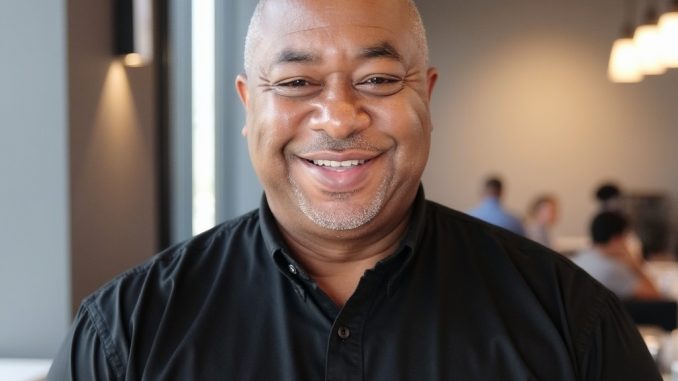
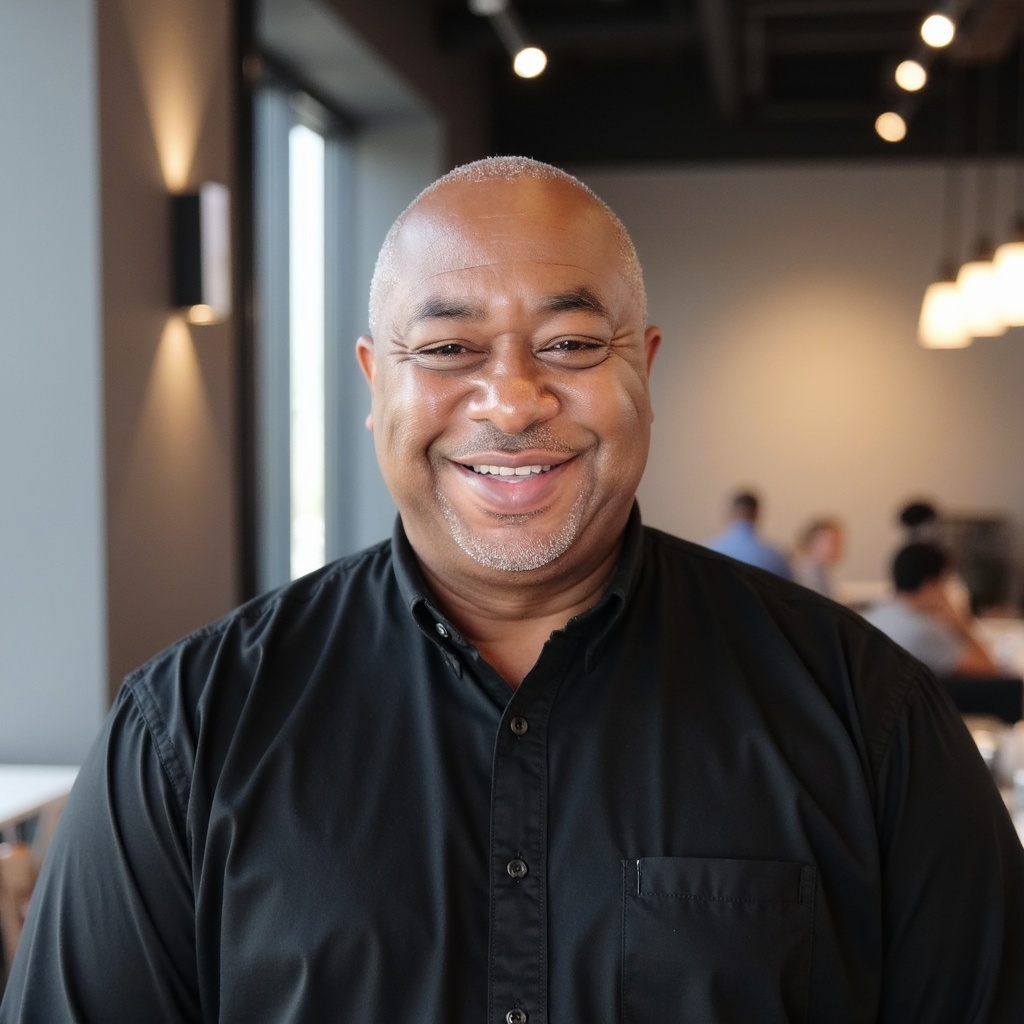
Zachary Antoine Jones is leading a technology company that is pioneering AI-powered, real-time contamination and quality intelligence solutions for the pharmaceutical and healthcare industries. Under his leadership, Sensor Shield has developed a platform capable of analyzing the contents of vials, syringes, IV bags, and other pharmaceutical containers without opening or altering the product. The company’s technology combines advanced sensing, artificial intelligence, and real-time analytics to protect industries including pharmaceuticals, fragrance and cosmetics, healthcare, biosciences, and other high-value, regulatory-dependent consumer products by improving quality assurance, patient safety, and operational efficiency.
Zachary’s company is more than an AI do-gooder; it is a culmination of extensive experience, talent, mentorship, and a drive to live out a purpose. Awarded a patent for his invention in 2024, Sensor Shield is as much about Zachary’s story and those around him as it is about the solution it provides.
The Odds and Family
Zachary and his company face the challenges of an evolving AI industry and an even harder challenge with accessing conventional funding. Of the over $314 billion provided to start-ups across the country, Black-led firms receive less than a percent of all start-up funding. Of the $67 billion reserved for AI start-ups, Black firms received .05%. The low participation has as much to do with social capital as other factors. Gatekeepers that fuel AI entrepreneurship, such as MIT, Stanford, Silicon Valley, and industry employers, support mainly White and Asian individuals and companies in the space.
But this story isn’t about the disparaging inequities faced by start-ups with Black founders; it’s about defying the odds and overcoming systemic challenges to create something remarkable. A Techstars New York City winner once told Zachary sentiments he had heard as a Black tech founder at an investor dinner: “It is hard to scale minority companies,” he recalls. “Your technology may be good enough to win; will others invest? I have never seen an African American take a tech company to a Billion-dollar IPO.” Zachary suggests that such sentiments can become “dream killers” to those who may be easily deterred. However, his early childhood and adult experiences equipped him to face adversity and lift him beyond the doubt many entrepreneurs face.
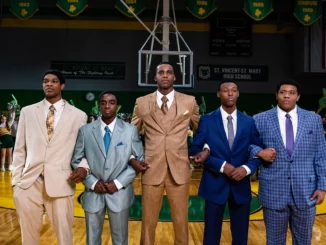
Zachary was born and raised in Denham Springs, Louisiana, as one of three siblings with his mother, Elizabeth Talbert-Self. He learned valuable lessons in Wyandanch, NY, under the tutelage of his uncle, Michael V. Talbert Sr. He left Louisiana at 17 to play collegiate basketball in Kansas and Texas. The impact of his mother, uncle, grandparents, and wife provided an unshakeable foundation that cultivated his ambition and his desire always to find a way to make things better.
Zachary candidly shares, “I don’t have many heroes, but Uncle Michael was my superhero, someone I looked up to and respected. I credit him for saving my life when he gave me the ultimatum of moving with him to Long Island, New York (Wyandanch) or staying in my current surroundings, where the statistical outcome was either death or jail.” “Uncle Michael taught me that hard work, faith and belief, and knowing yourself are critical to your success,” he says with evident pride for his uncle. “Most importantly, he emphasized that as a man, you always keep your word.” While these lessons may seem basic or clichéd in principle, Zachary’s trajectory and dedication reinforce that these principles are harder to follow without exposure to good people, valuable and opportunistic experiences, and critical moments in a person’s development.
Others helped mold and shape his identity and dream. Zachary recounts how his grandmother provided “the kind of love and support that made him feel like he could do anything.” His grandfather “ran a tight ship; his no-nonsense demeanor kept us in line. He only said two words most of the time: yes and no,” Zachary says, laughing at the thought. “My wife, Shaunta, is my co-founder and I credit her for not only believing in my dreams but also rolling up her sleeves to help make them a reality.” The people in his life fortified him as a problem-solver.
The Path of a Problem Solver
During the early 2000s, Zachary’s studies provided him the opportunity to work in New York at Merrill Lynch. He spent more than fifteen years building successful relationships within the legal technology and information management industries. He worked alongside Am Law 100 law firms, Fortune 500 corporations, and government agencies, delivering complex technology solutions involving litigation support, data management, compliance, and electronic discovery. Zachary learned from his experience. However, looking back, there are international incidents that set his desire to problem-solve in higher gear.
Zachary was in New York during the terrorist attacks on September 11, 2001. The event and its aftermath influenced his desire to pursue technology further, earn certifications, and view the field as part of the solution after a moment that changed American and world history. Almost two decades later, Zachary’s desire to use technology was further influenced by another world event: the COVID-19 pandemic. All these experiences led him to pursue AI to address issues faced by consumers and companies in an ever-changing environment that challenged buyer confidence and firms’ ability to track and protect their products.
When it came to technology and AI, Zachary immediately saw opportunities not only to provide solutions but also to help safeguard consumers. During and after the pandemic, he focused on food services. “Concerning AI and in life, I always saw myself as a problem solver by nature,” he proclaims. “I recognized a problem with food services that used third-party applications. Food was often tampered with or did not always meet safe standards upon delivery.” Zachary was on to something. Shortly before the pandemic, a US Foods survey reported that 28% of drivers admitted to tasting customer food, with 54% citing a temptation to sample. Approximately 85% of consumers desired tamper-evident packaging for food deliveries. He envisioned technology that would take protections a step further.
Zachary’s prototype would later evolve into and influence Sensor Shield’s AI-driven molecular authentication and tamper-defense system, which targeted the food-service issue. Originally, he sought the support of Michael Nizich, PhD, Director of the Entrepreneurship and Technology Innovation Center at the New York Institute of Technology. The prototype would help identify tampering, temperature changes, and the location of goods. However, third-party vendors of food delivery applications were not interested in the solution, not because of its effectiveness, but because of responsibility issues. Vendors use contractors, not employees, to deliver food. If they used such a consumer-demanded system and devices, it would hold them liable for tampered food deliveries. In other words, Zachary’s vision came with consequences for protecting consumers. While a minor setback, another event close to home would influence the direction of the Sensor Shield’s mission.
Today, Innovation and The Power of a Team
While the food application delivery firms feared the responsibility of knowing, another event in Zachary’s life forever changed the direction of his pursuits. His mother-in-law had a medical emergency that required the same-day delivery of insulin. Due to temperature regulations at the time, same-day delivery was difficult. “This touched home for me,” he recalls. “I decided then to pivot to pharmaceuticals and the biotech side.” Some may consider this event a story of necessity inspiring invention. It is more of a case of inspiration and innovation. What began as a solution focused on pharmaceutical security and cold-chain monitoring has evolved into a next-generation quality intelligence platform that detects contamination, formulation inconsistencies, environmental changes, and other critical quality indicators in real time. After being awarded a Technology Transfer License from NASA to commercialize its patented sensors, Zachary never felt more strongly about his company’s new direction and assembled a team to support it.
To pursue his new initiative and innovation, he assembled a multidisciplinary team. Members include James Phelps, Lead Engineer with over 30 years’ experience that includes National Aeronautics and Space Administration(NASA), Lockheed Martin, and Honeywell. Roger Smith (Sierra Turbines) serves as the Software Lead, a former Apple engineer with expertise in mobile systems, HIPAA-compliant infrastructure, and real-time alert platforms. Ramesh Ramchandani (mobile application and software integration) and Shaunta Jones are Co-Founders and Director of Strategy, with years of experience in customer engagement and operational execution. Will McCaffrey leads business development with decades of experience in fundraising, growth readiness, and commercialization. With a team and a new vision, Sensor Shield developed into the firm it is today.
Today, the company provides one of the most innovative platforms with a proprietary sensor and software ecosystem engineered for regulated environments. While the company is developing more investment opportunities, its advisors include the likes of Malcomb Coley, former senior executive with Ernst and Young; Susan Nichols, CEO of Propel Bio Sciences; Rosemarie Robinson-Peters, ESQ, Director, Head of Regulatory Issues Management and BBPLC Controls Governance at a major Wall Street bank; and Shirley Yager, former Director, Product Management at Qualcomm. The advisors provide mentorship that will propel Senor Shield into the future and honor Zachary’s journey.
Zachary smiles thinking about the journey. “Shaunta and I are passionate about making lasting changes for generations to come,” he says. “We’re proud of the work we’re doing and look forward to what the future holds.” The future of Sensor Shield and firms like it can only be shaped by opportunities and support. Zachary and his team exemplify how diverse experiences and ways of thinking can make our world safer in a new era of uncertainty about AI’s impacts. His journey is paramount to his thinking. Perhaps Zachary sums it up best. “A mentor once told me, ‘You have two names. There is the name you are born with, and the name you create’” After all, innovation still needs great human minds shaped by real lives.
To learn more about Sensor Shield, visit their website at www.sensorshieldapp.com.
About The Author