
By Staff
For eight months, Dell Jerron Fletcher watched his identity become eclipsed by an accusation, a mugshot, and a public narrative he had no opportunity to challenge. A father, military veteran, cybersecurity professional, and first-generation college graduate, Fletcher says he was forced to draw upon every measure of discipline, courage, and resilience he possessed to uncover evidence he believes the system had overlooked. Following the dismissal of his case, he is speaking openly about the psychological toll of being falsely accused, the fragility of the presumption of innocence, and his determination to reclaim not only his name, but the fullness of the man behind it.
What do you most want people to understand about Dell Jerron Fletcher—the man behind the headlines and mugshot?
I want people to understand that a mugshot is not a verdict.
For eight months, my face circulated on social media and my name appeared in newspapers alongside an accusation—before any trial, finding of fact, or opportunity for me to tell my story. For many people, that single image became my entire identity.
But I am a father who chose to raise a daughter who is not biologically mine. I am a veteran who deployed to Afghanistan and returned home carrying wounds most people cannot see. I am a cybersecurity professional who spent twelve years protecting individuals and organizations while building a meaningful life in a community I genuinely love. I am also the first person in my family to graduate from high school, earn an undergraduate degree, and complete a graduate degree.
When nearly everything was stripped away, I sat down at a computer and taught myself digital forensics because discovering the truth mattered more than passively waiting for someone else to uncover it.
That is who I am—not the mugshot or the headline, but the man who refused to allow someone else’s false narrative to become his permanent record.
How did your military service and career shape the discipline and resilience you relied upon during this ordeal?
Military service teaches you how to continue functioning under circumstances that might otherwise make functioning feel impossible. You learn to compartmentalize, follow a process amid chaos, and take the next necessary step even when you cannot see the entire path ahead.
That discipline kept me returning to the evidence when I felt I had nothing left. It was not inspiration or fleeting optimism; it was discipline—the same discipline that gets a Marine up before dawn, carries a service member through deployment, and propelled me across a marathon finish line just six weeks before my arrest. One step, followed by another, and then another.
My cybersecurity career gave me something equally important: a professional commitment to follow the evidence wherever it leads instead of accepting the first narrative presented. In cybersecurity, assumptions create vulnerabilities. You verify, document, and cross-reference. You look beneath the surface. Those habits, cultivated throughout twelve years of professional practice, became the very tools I used to pursue the truth in my own case.
I learned that resilience is not a feeling; it is a practice. It meant reviewing one more digital artifact at two o’clock in the morning when I was exhausted. It meant getting out of bed after receiving devastating news. It meant calling the Veterans Crisis Line instead of retreating into silence. None of those decisions appeared dramatic in the moment, but every one of them was necessary.
You have described seeing your daughter afraid of you as the most painful moment of this experience. What did rebuilding her trust teach you about love, fatherhood, and healing?
Nothing during those eight months—not the jail cell, the financial collapse, or seeing my mugshot on social media—broke me in the way that moment did.
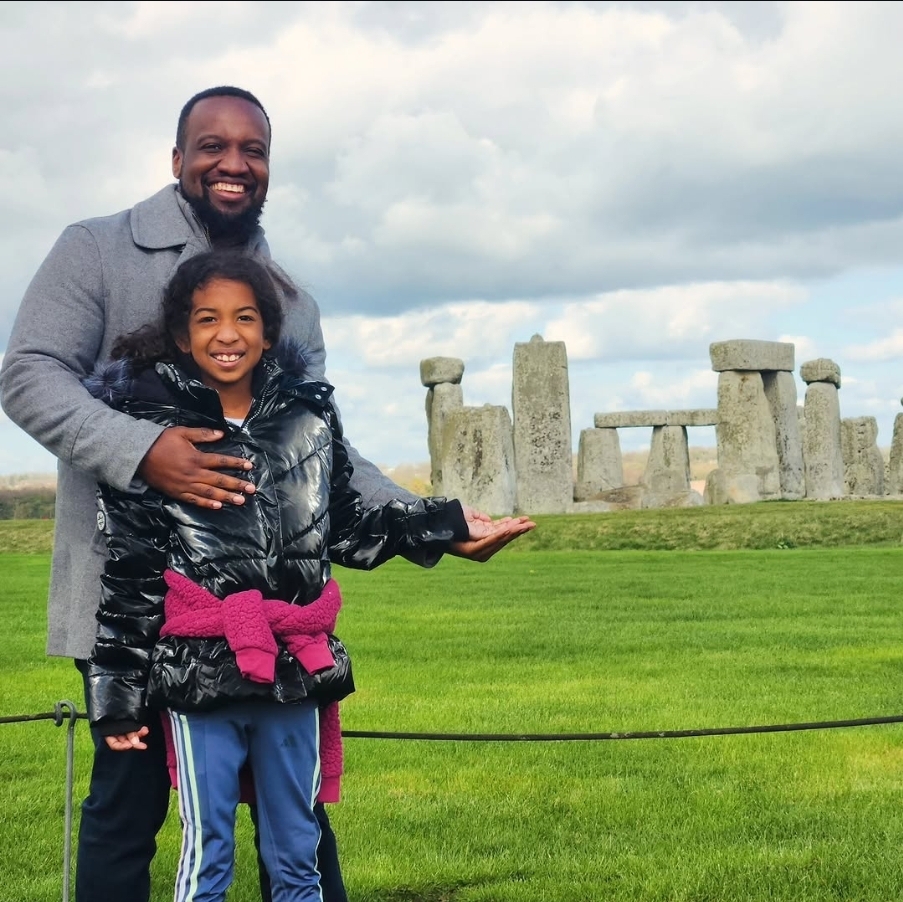
My daughter was curled into a fetal position in the backseat of a car, crying and carrying the memory of a police officer awakening her on a school morning. She was afraid of her father because she believed I had hurt someone. That image remains with me in a way I do not believe will ever completely disappear.
Rebuilding her trust taught me that love is not merely declared; it must be demonstrated through ordinary, consistent acts. It meant showing up, cooking together, playing, laughing, and being present without an agenda. Children do not necessarily heal through explanations. They heal through the reassurance of a safe, consistent, and undramatic presence.
I had to be there for her without expecting her to immediately understand, forgive, or feel differently about what she had witnessed. I told her that her father had not hurt anyone and that the police would not return to our home. Gradually, she came back to me.
One day, when she is ready, I will share the complete story with her. For now, what matters most is that she is no longer afraid of me. I intend to spend the rest of my life demonstrating that the man she briefly feared was never the man her father truly was.
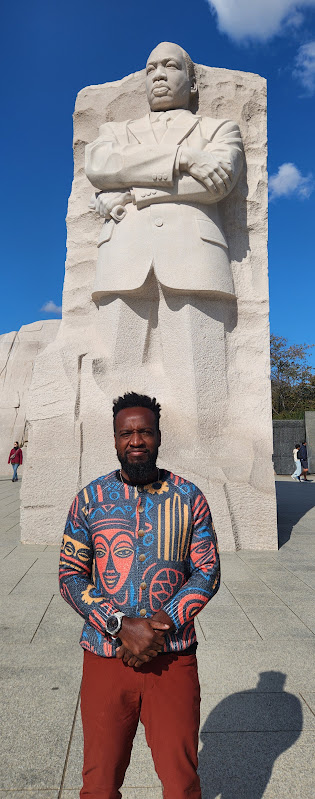
Why is it important to speak openly about the psychological consequences of a false accusation, particularly as a Black man and a veteran?
Because silence almost killed me.
I say that plainly because meaningful change requires people like me to stop pretending we can swim indefinitely beneath the weight of adversity when, in reality, we are drowning. I had to rely upon my support system as a lifeline and allow the people and resources around me to carry some of the weight.
I called the Veterans Crisis Line numerous times over many months—sometimes at two o’clock in the morning, alone and carrying something I did not know how to put down. My preexisting service-connected PTSD intensified considerably. I began experiencing panic attacks in public places, something I had never endured before, and I became largely confined to my home. I eventually attended a health and wellness retreat led by a retired Green Beret because I understood that if I allowed my mind and body to collapse, nothing else would matter.
As a Black man in America, you are often taught, explicitly and implicitly, that vulnerability is dangerous and asking for help is a sign of weakness. You learn that you must be twice as strong simply to receive half the consideration. Military culture can compound that burden by reinforcing the belief that you must handle everything yourself, conceal your pain, and keep moving.
That pride nearly prevented me from receiving the help I desperately needed.
If I can use this platform to accomplish anything beyond telling my own story, I want every Black man, veteran, and person carrying an invisible but overwhelming burden to understand this: calling a crisis line is not failure. Therapy is not weakness. Medication is not surrender. During eight months that required extraordinary courage, asking for help may have been the bravest thing I did.
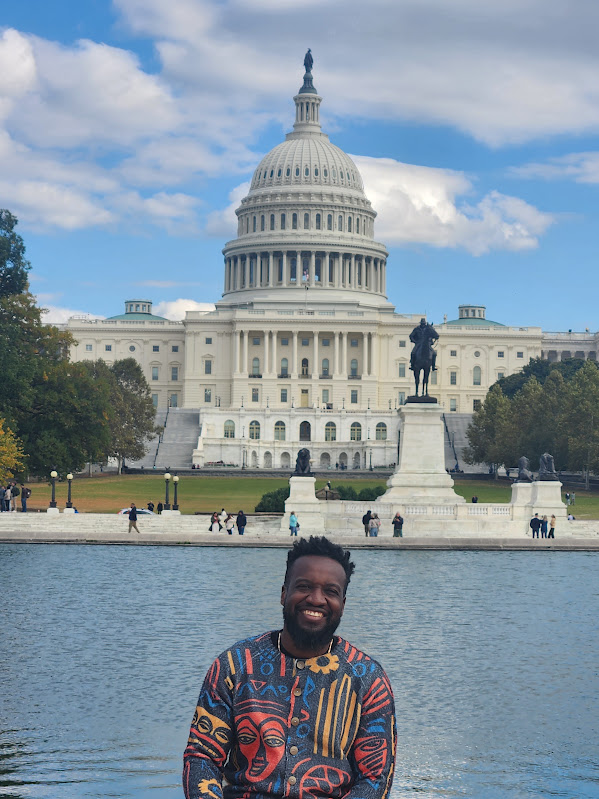
What did you discover through your forensic investigation, and how did technology and artificial intelligence help you challenge what you believed was an incomplete narrative?
I discovered that the truth had been there all along—contained within a digital extraction that existed two days before my arrest—waiting for someone to examine it thoroughly.
Using artificial intelligence as a learning tool, I taught myself how to navigate Cellebrite digital forensics. I reviewed more than 65,000 digital artifacts from the discovery evidence and cross-referenced my findings against federal and Arkansas law. I did this line by line, over several months, while my mental and physical health continued to deteriorate.
The digital information I uncovered on the complainant’s phone contradicted critical elements of the narrative advanced against me. I discovered that she had identified another Black man—not me—in her initial reports to law enforcement. I also found behavioral evidence on her phone that I believe was inconsistent with her account, as well as exculpatory information that had been in the possession of investigators before my arrest but had not been disclosed.
AI accelerated my ability to learn. It helped me understand legal standards in an area in which I had no formal training and organize thousands of data points into a coherent, documented presentation. My attorney ultimately characterized the work as extraordinary.
Every piece of digital evidence that contributed to my freedom was evidence I uncovered myself—not my defense attorney, the police, or the prosecution. My investigation shortened the time I remained in legal limbo, helped me avoid a trial, and demonstrated that the truth had been present from the beginning. Someone simply needed the discipline and the tools to find it.
This experience taught me that AI, when placed in the right hands and applied with integrity, can be more than a professional resource. It can become an instrument of justice. Sometimes the skills we develop throughout our careers become the very skills we need to survive our lives.
What do you believe the public needs to understand about due process and the presumption of innocence based on your experience?
The presumption of innocence may be a legal standard, but it is not always a social or institutional reality.
My name appeared in the newspaper before I had spoken with an attorney. My mugshot circulated on social media while I was still sitting in a jail cell. I lost two career opportunities—including a verbal offer for a Deputy Chief Information Security Officer and Privacy Officer position—before any evidence had been examined at trial. My employer froze my compensation and placed me on suspended leave. The system moved against me with remarkable speed, yet moved toward the truth with remarkable slowness.
The public must understand that an accusation is not a verdict, probable cause is not proof of guilt, and a mugshot is not a conviction. The threshold for an arrest can be met before a complete investigation has occurred or all available digital evidence has been thoroughly examined.
When the system gets it wrong, the damage does not simply reverse itself after a case is dismissed. Lost career opportunities do not automatically return. Financial devastation does not instantly repair itself. A reputation does not reset, and a child’s fear does not immediately disappear. Dismissal may close the legal chapter, but it does not erase the human consequences.
I am pursuing civil remedies because accountability matters—not solely for financial compensation, but because due process must have meaning. When it fails, there must be a mechanism for addressing that failure.
That pursuit has not been easy. I contacted approximately fifteen to twenty attorneys locally and nationally, and many declined to accept the case. If a case is not considered nationally newsworthy, it can be extraordinarily difficult to secure representation. You can endure the most life-altering experience of your existence and then be expected to quietly tend to your wounds and move forward as though nothing happened. I do not believe that can be the answer.
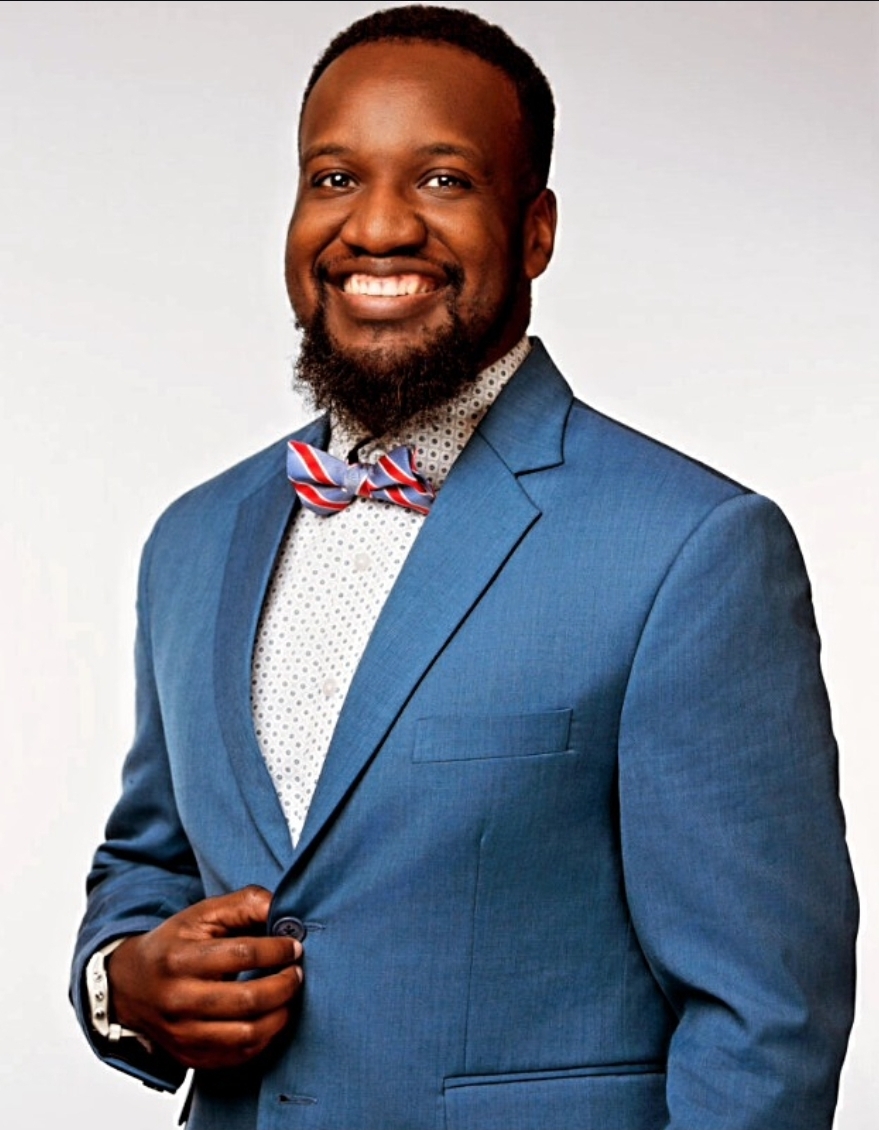
How did navigating the criminal justice system alter your understanding of what it means to be a Black veteran in America?
On the morning of my arrest, I said to the officers who entered my home, “I am a Black man in Arkansas, and I am scared.” I meant it with everything in me. I also understood that my fear was not irrational; it was historically informed.
I had served in two branches of the United States military and deployed to Afghanistan. I had received community awards, built a twelve-year professional career, and maintained no prior criminal record. By every measure our society claims to honor, I had done everything right.
None of it protected me.
I was placed in a cell block with individuals facing charges that included capital murder and crimes against children. I shared a cell with two other men despite there being only two beds, and I was confined for 23 hours a day. The telephones frequently did not work, yet I had only three days to report my arrest to my employer.
The only reason I met that deadline was because I wrote a letter to a correctional officer, thanked him for his service, explained that I was a veteran who had never been incarcerated, and asked for ten minutes on a telephone. In a rare act of grace, he opened the cell door, instructed the other men to remain inside, and gave me the fifteen minutes I needed. That moment helped preserve my career and allowed me to seek assistance before the reporting window closed.
This experience did not teach me something entirely new; it confirmed what history had already shown me. The promise of equal justice under the law has not been fully realized in this country. A Black man’s credentials, military service, professional accomplishments, and character can become invisible in the presence of an accusation. The system can move with breathtaking speed to restrict his freedom and with breathtaking slowness to restore it.
I am not embittered, but I am clear-eyed. I intend to use that clarity—in my civil action, in telling this story, and through every platform afforded to me—to speak honestly about what I witnessed, what I endured, and what I believe must change.
What does reclaiming your name mean to you, and how do you hope to use your voice for others?
For eight months, I watched someone else’s version of who I was circulate throughout the world while I was required to remain silent. My name was attached to an accusation, my face was reduced to a mugshot, and I was forced to live inside a narrative I did not write and could not publicly correct.
Reclaiming my name means telling the complete and truthful version of my story. I am doing it for myself, because that matters enormously, but also for every person living in the silence I have just emerged from—carrying a false accusation they cannot yet discuss, wondering whether the truth will ever surface or whether anyone will believe them when it does.
I want them to understand that the truth can be found, evidence can be uncovered, and tools are available. You do not always have to wait passively for a system that has already failed you to correct itself.
I also want to speak honestly about the cost. Resilience without honesty becomes a performance, and I am not interested in performing. I called the Veterans Crisis Line many times. I nearly broke on more than one occasion. I had to lay aside the pride I had developed through decades of military service and allow other people to help me. That may not be the triumphant version of the story, but it is the truthful one—and the truth is the only version worth telling.
Someone who witnessed this ordeal told me that my spirit animal was the wolf. I immediately recognized something truthful in that description. A wolf is loyal to its pack and capable of both tenderness and ferocity. It does not perform strength or allow its surroundings to redefine its nature.
The chains placed upon my life were not merely metaphorical. They had names: a false accusation, an arrest in front of my daughter, ten days in jail, two lost career opportunities, a publicly circulated mugshot, frozen compensation, financial collapse, an inability to help my father as he entered long-term care with moderate dementia, my mother’s eviction, and the image of my daughter afraid of me.
Those chains were real, but they were external. My identity remained internal.
They could restrict my movement, freeze my income, damage my reputation, and frighten my daughter. They could not change who I was: a veteran, a father, a truth-seeker, and a man who taught himself an entirely new forensic discipline while in crisis—and found the evidence anyway.
Freedom did not arrive in a single dramatic moment when the dismissal order was signed on August 3, 2026. The chains had been breaking throughout those 243 days. Every artifact I examined when I felt I had nothing left broke another link. Every morning I got up when everything inside me wanted to remain down broke another. Every time I called the crisis line instead of surrendering to silence broke another. The dismissal was the moment the final link gave way beneath the cumulative weight of everything I had already done to free myself.
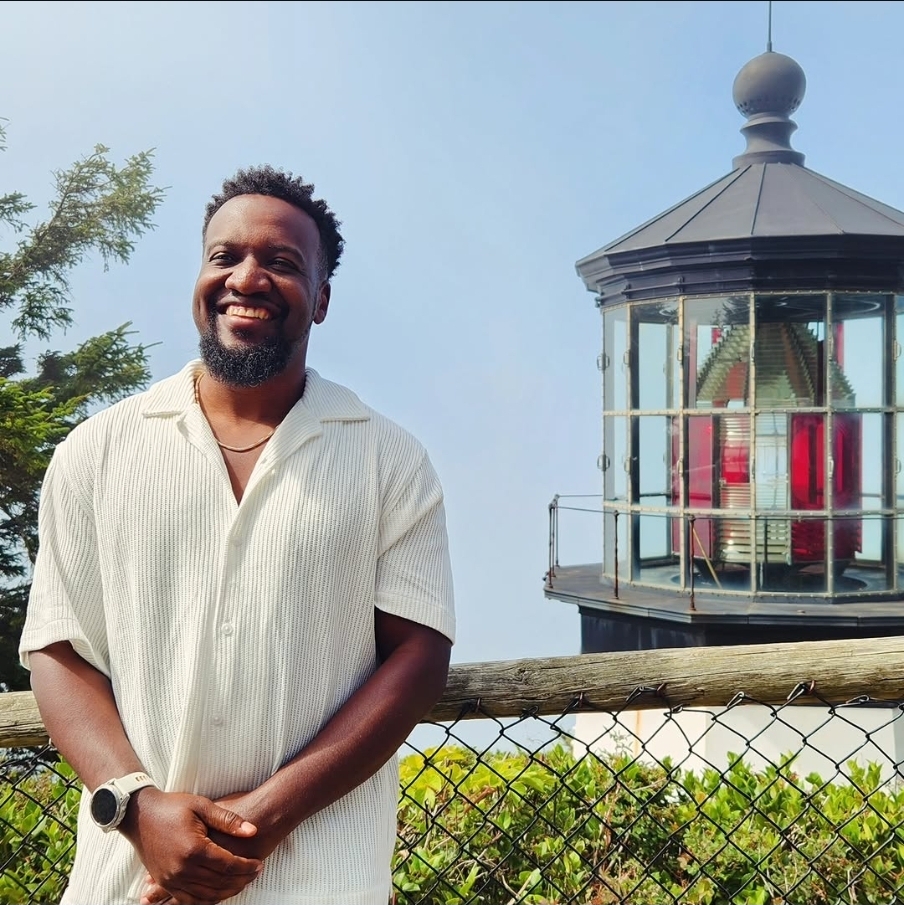
I plan to commemorate that truth with a tattoo of a wolf breaking through chains. It will not be a trophy or merely a celebration of survival. It will be a permanent reminder of what I discovered about my own nature under the most devastating conditions of my life.
The chains were real. They were heavy, and for eight months they changed the way I breathed. But they never changed who I was.
I was the wolf when they placed me in chains, and I remained the wolf while I wore them. The wolf breaks free—not because someone removes the chains, but because it refuses to stop until they can no longer hold it.
About The Author