
By Staff
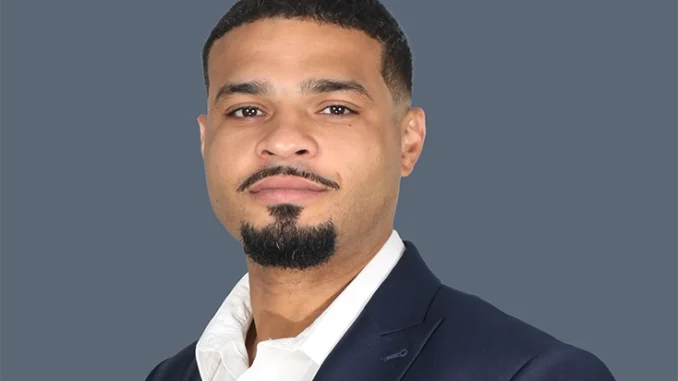
There is a quiet power in individuals who choose to honor their word—not only to others, but to themselves. For LaSean Rice, Jr., that promise is the driving force behind a life shaped by resilience, service, and an unwavering pursuit of purpose. From the neighborhoods of Cleveland, Ohio, to his service as a United States Navy Corpsman, and now onto the evolving stages of the entertainment industry, Rice embodies a rare balance of grit and grace. His journey is not simply about becoming an actor; it is about becoming a man who refuses to abandon his calling—one who understands that discipline, faith, and lived experience are not separate from artistry, but essential to it.
How did growing up in Cleveland shape the resilience, character, and perspective you carry into your life and career today?
Cleveland instilled in me a heightened sense of awareness—an understanding of how easily kindness can be misinterpreted as weakness. I learned early on to recognize intention, to discern character, and to stand firmly in who I am. That environment sharpened me emotionally and mentally, teaching me not only how to endure but how to navigate with purpose. You develop a voice in Cleveland—you learn to speak up, to protect your peace, and to carry yourself with strength.
At the same time, my upbringing was grounded in love, faith, and community. The lessons passed down from family—both spoken and spiritual—gave me a foundation that continues to guide me. Those values remind me that no matter the challenges I face, I am equipped to rise above them. Cleveland didn’t just toughen me; it prepared me to believe that I can conquer anything placed before me.
How did your experience as a Navy Corpsman influence the way you approach storytelling and the roles you choose as an actor?
Serving as a Corpsman taught me the importance of connection—real, human connection. In that role, empathy wasn’t optional; it was essential. You are responsible for people in their most vulnerable moments, and that requires presence, understanding, and care.
I carry that same approach into my work as an actor. Whether I relate directly to a character or am discovering something entirely new, there has to be a genuine connection—both to the role and to my scene partners. When that connection is present, the performance becomes truthful. And when the work is truthful, the audience feels it. For me, storytelling is not just about delivering lines; it’s about creating moments that resonate on a human level.
What ultimately gave you the courage to pursue acting later in life?
My children gave me that courage—without even realizing it. I remember driving my sons one day and asking them what they wanted to be when they grew up. After they answered, my oldest turned the question back on me and asked what I wanted to be as a child. I told him, “An actor.” Then he asked me a question that stopped me in my tracks: “Why didn’t you do it?”
In that moment, I couldn’t give him an excuse. I couldn’t tell my children that life had gotten in the way of my dreams, because I never want them to believe that their dreams are negotiable. So I made a decision right then—I would pursue acting, not just for me, but as a commitment to the example I set for them. This journey is about honoring my word. It’s about showing my children that purpose doesn’t expire.
What lessons from your military service have proven most valuable as you build your acting career?
Discipline, structure, and consistency—those are the pillars that continue to guide me. In the military, your routine is defined for you. In the entertainment industry, you must create that structure for yourself. That transition requires accountability and self-mastery.
As I grow in my career, I apply those same principles to my craft. Whether it’s preparing for a role, maintaining physical fitness, or developing the mental space needed to perform, I approach it with intention. The freedom of this industry is a gift, but it demands discipline to truly maximize it. My military background ensures that I never take that responsibility lightly.
How did your training at Creative Veins Performing Arts Studio shape your development as an actor?
Creative Veins was a transformative experience for me. It took what I thought I understood about acting and expanded it in ways I hadn’t imagined. The instructors introduced me to techniques that challenged me to go deeper—not just in performance, but within myself.
I learned how to access emotion, how to understand it, and how to channel it authentically. Some moments in those classes felt almost therapeutic, because they required a level of vulnerability that pushed me beyond my comfort zone. More than anything, Creative Veins gave me a sense of community—a space where artists at all levels could grow together. I carry a deep sense of gratitude for that experience.
Why is mentoring and giving back to young people such an important part of your journey?
Because that’s where real impact lives—in shaping the next generation. There is no greater reward than contributing to someone’s character development. As a father, I think constantly about the kind of world I want my children to grow up in. And that world is shaped by the people within it.
If I can play even a small role in helping young people understand discipline, integrity, and the importance of physical and mental wellness, then I am contributing to something larger than myself. I believe in the principle of “iron sharpening iron”—that we are all better when we uplift one another. That’s the legacy I want to be a part of.
How do you approach the responsibility of representation as an African American man of faith in the entertainment industry?
I understand that responsibility comes with visibility. Whether we acknowledge it or not, people are influenced by what they see. With that in mind, I approach my work with intention. I want to be part of projects that carry meaning—stories that spark thought, inspire change, or offer a new perspective.
My faith grounds me in that responsibility. It reminds me that every opportunity is a chance to contribute something positive to the world. I may not control how every story is received, but I can be mindful of the energy and purpose I bring to it.
What do you hope audiences ultimately see in your story and in your work?
I hope people see authenticity. I hope they see a man who made a promise to himself—and kept it. A man who chose to pursue his dream, not in spite of life’s challenges, but because of them.
More importantly, I hope they see a reflection of what’s possible within themselves. If my journey shows anything, it’s that it’s never too late to step into your purpose. We all carry greatness within us. My goal is to live in a way that reminds others of that truth.
Social Media
About The Author