
by Staff
What first awakened your passion for acting, and how did that early spark find its way into your life as an educator?
I loved watching TV as a kid! I was addicted to it! I would find myself watching shows that I had no business watching as a 10-year-old kid! It was something about it that was just so enchanting to me, how people could just be in this box and pretend to be different people and do different things. I was hooked I knew at a very young age that I wanted to be on television and I wanted to be an actor. I didn’t necessarily know how I was gonna do it at the time, but I knew!
When I got older I was in drama club at my high school and I was in a theatre group at my church so when time came to go to college, I knew I’d study theatre, that was a given. I’m thankful that my parents were cool with that. After undergrad, I went straight to grad school at the University of Washington for my MFA in Acting, in part because in wasn’t ready for the real world and I felt that having an master’s degree would be a great tool to not only sharpen my skills as an actor but hone my skills as an educator. Being an actor enhances my skills as an educator, and vice versa. While my ultimate goal is to act full-time, I don’t begrudge what teaching has allowed me to do: it’s allowed me to have work to come back to in-between acting gigs. It has allowed me to have full-time health insurance. It has allowed for my student loans to be forgiven. I will always be grateful for being an educator.
How do you balance the demands of a full day in the classroom with the physical, emotional, and creative energy required for rehearsals, auditions, and performances?
So I am what is called a Teaching Artist, which means just what it says I’m an artist (in this case, an actor) who also teaches. It’s like an artist-in-residence; I go to different schools and teach theatre. For the most part, I am not in the same school nor do I see see the same group of students everyday. Each day is a very different; I could teach one class in a day, or two classes, or even six. It is all very varied. If I’m doing a show at a regional theater, I take time off from teaching and I go away to work on the show, for say, 3 months then come back to teaching when it’s over.
For instance, last year I was doing a regional play at Studio Theater in D.C. called Downstate and I stayed in D.C. for 3 months to do it. After the show was up and running, I made the decision to commute back and forth to New York to teach a few classes on my days off. It was a lot of work. I don’t know if I would ever do that again but that’s what I did. These days, 99% of my auditions are virtual so it allows for some flexibility in that I can record them from comfort of my home. At the same time, it’s a lot more tech work. So for me, balancing the work, while it can be challenging, it’s what I signed up for. With both vocations, you always got to think on your feet, you always have to be willing to pivot at any given moment and you always have to be on what I call ‘1O’ at all times.
Caffeine helps.
When you think about your journey as an actor, what moments stand out as transformative-those experiences that reaffirmed why you pursue this craft?
A moment that stands out to me as most transformative was very recently being on Law and Order again. This was my second time doing that show; the very first time I did it I was so excited because that was to be my first primetime network TV appearance. I was completely excited I couldn’t control my
excitement. Long story short, I told everybody (and then my parents told everybody and their grandmother) that I would be on the show. And of course, my portion got cut. I was devastated and I felt defeated which is why I’m very cautious about telling people about my TV appearances. (People generally mean well but if you’re not in the business you just won’t fully understand.) Anyway, fast forward… years later: Same show, bigger role and I didn’t get cut! That was cool. You’re not running a race in this business, you are definitely running a marathon… two of them!
What does preparation look like for you, not only for roles but also for auditions where you may only have a brief moment to show the depth of your talent?
Knowing your words really helps. You need to know what you’re saying. That said, sometimes I get pages and pages of sides the audition scenes we are given to prepare for the audition) and I need to be ready in a short period of time. When preparing, I always think that it’s important to do something outside the box… it could be a look, it could be a gesture, it could be the way you say a line; something that sets you apart from others especially when you have very little time to showcase what you got on camera. I think we actors have more control when it comes to auditions than we give ourselves credit for. I try to bring that into the audition space each time.
How does being an educator inform the way you approach characters, storytelling, and the responsibility that comes with being on stage or in front of a camera?
I think a lot about subtext, what’s underneath the lines, when approaching characters, storytelling and other responsibilities that come with being on stage. I love nuance. We as people are not one-dimensional. We as black people can’t be one-dimensional; we’re multi! That said, I really try to make sure that the characters I portray and the stories I tell show that nuance, vulnerability and different ways of the things that make us human beings. It is so important to be present and in the moment each and every time. If I’m not in the moment that means I’d rather be somewhere else and if that’s the case, why even do it?
What have been some of the challenges of navigating two careers that both demanded passion, presence, and patience, and how have you learned to protect your creative energy?
Making time for both has always been a challenge but it always works out in the long run. I always take on a sense of guilt when I have to go away and leave my students for an extended stay on an acting job, it’s the loyalist in me. They are always very resilient through it all though. That’s where the protection lies for me.
In the world of acting, auditions can be both exhilarating and humbling. How do you mentally and emotionally prepare yourself for that process, and what have those experiences taught you about resilience?
Talk about resilience… I try to spend as much time as I can preparing for an audition, although sometimes I just don’t have the bandwidth because of other obligations.
There are some of casting people who inundate you with all of this text to prepare within a short amount of time. I give myself grace with that and do my best. There’s a saying, “stay ready so you don’t have to get ready.” I think that’s a great acting mantra and it’s one that I try to adhere to. And if there’s something that I really want and I don’t get the job or I don’t get a callback, I dust myself off and try again. There will be other opportunities. (Right?)
How do you integrate the discipline you expect in the classroom with the discipline required for the entertainment industry, especially when the outcomes are often unpredictable?
I treat my students like actors and I am in constant expectation of them. Most of the young people that I teach are black or brown and from the Bronx, like me.. Society doesn’t coddle them nor will I. That said, my stern approach provides discipline. It’s fair and it’s definitely real.
What role does community-your students, fellow actors, mentors, or supporters-play in keeping you grounded and motivated on both paths?
Since I moved back to New York, I have cultivated a really good support system, which is a mixture of family, fellow actors and older performers, who’ve I’ve admired on TV as a child and have now become “mentors” that are now industry friends. We record each others’ auditions, give each other notes and it all comes from a genuine place. It’s refreshing because the industry can be so very disingenuous! “Oh so and so is looking for a teaching artist to work with this group of students…” or sometimes I’ll come across an audition and I’ll say “Oh I think you’d be right for this, why don’t you see if you can get audition?”
As far as learn from my students every single day; teaching allows me to aim towards being a better actor, a better educator and prayerfully over all, a better human being.
As you continue evolving as both an educator and an actor, what kind of legacy do you hope to build, and how do you envision your story inspiring the next generation of dreamers?
I hope to help usher in the next generation of actor Ieducators. My goal is to simply have students feel comfortable with speaking in front of others. If a student can speak in front of a large group of people comfortably then I have done my job, it’s a byproduct of being an actor, as far as I’m concerned. I want to continue to tell my story to those who’ll listen, to those who want a similar career path.
My advice for any student who wants to get into the business is always the same: Study. That doesn’t mean take one or two courses or do one play and then think you have the chops to do this for a living, that’s not to say those things don’t happen because they can and do, at times. I’m talking about acquiring training. Personally, I have an MFA in Acting and prior to that I did 4 years of undergrad where I majored in theatre..The expense alone is daunting. Everybody doesn’t have to do that but I needed it! But find a common ground and a find a place to train and hone your skills; that is your armor. And that is something that can never be taken away from you.
About
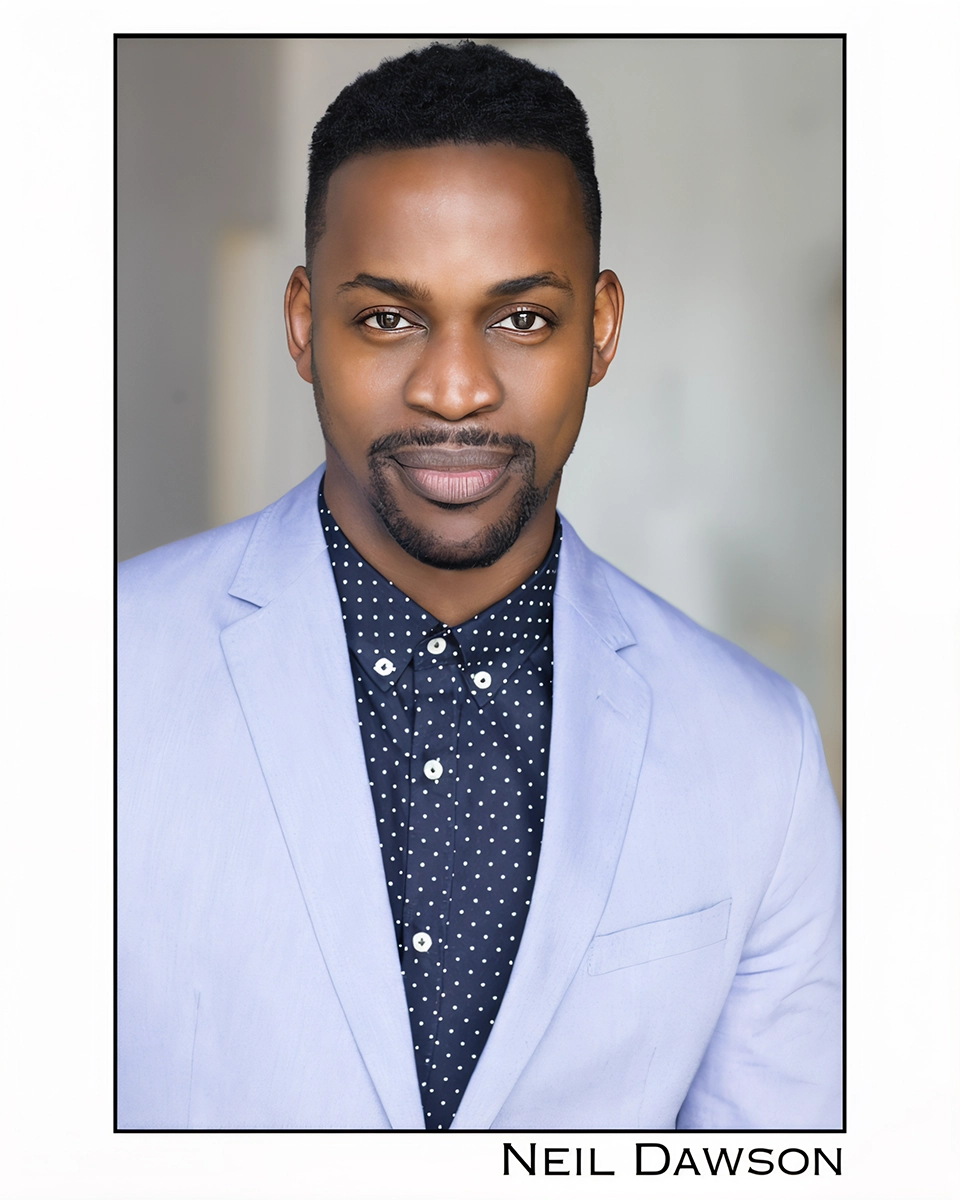
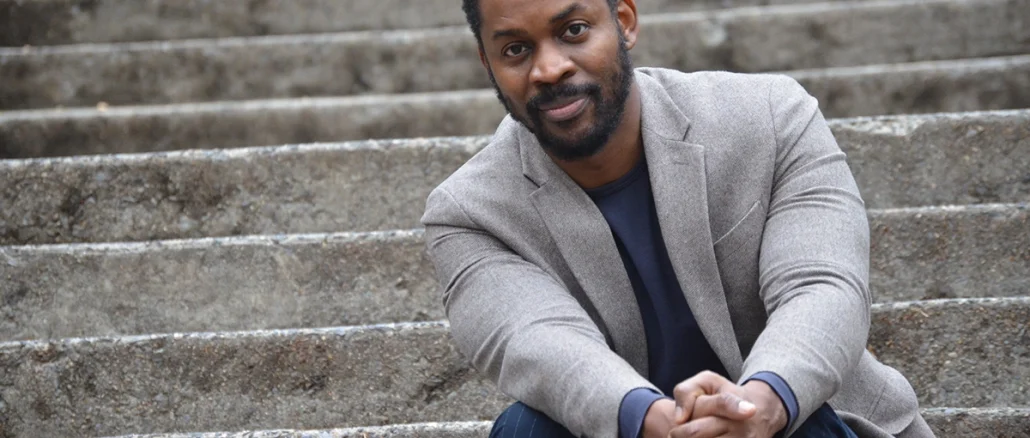
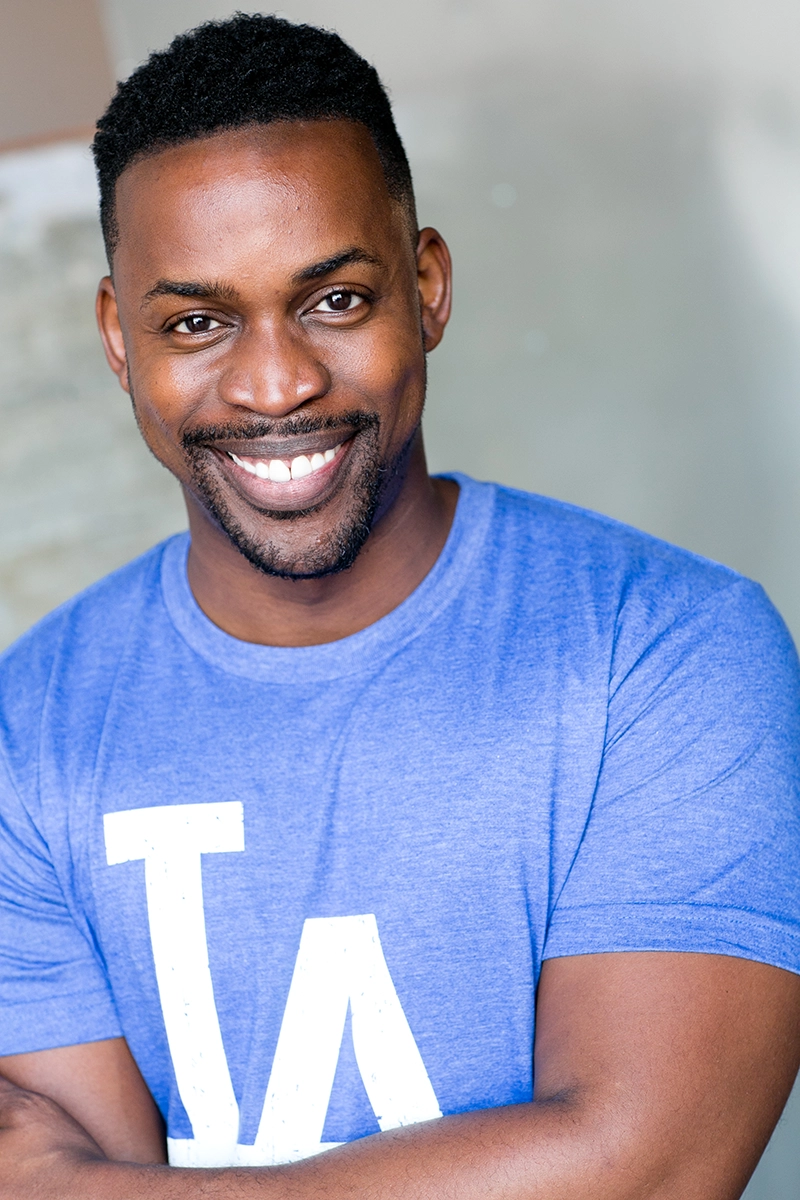
Neil is the youngest child born to Tortola, British Virgin Islands natives Clarence and Ivy Dawson. Raised in the Bronx, Neil possessed a passion for acting at an early age, thanks in part to his first acting teacher, Terry Lee King. He studied theatre at Temple University and went on received a Master of Fine Arts degree in Acting from the University of Washington’s Professional Actor Training Program. From there, he started his professional acting and teaching career, having performed throughout the United States and internationally in plays such as Macbeth, Ain’t Supposed to Die a Natural Death, Stick Fly and Downstate, to name a few.
He has appeared in numerous national commercials and voice-overs for Home Depot, Wendy’s, Metamucil, Jared, Red Lobster. TV appearances include Law and Order, New Amsterdam, FBI. Currently, he recurs on MGM+’s Godfather of Harlem as civil rights activist Cyril DeGrasse Tyson. In addition to performing, he is a master arts educator and teaches theatre to young people throughout New York City. Neil is a member of Actors’ Equity Association, Screen Actors Guild and a proud member of Alpha Phi Alpha Fraternity, Inc.
About The Author