
By Ben Jealous
Look at the world around you. The sun rises on time. The seasons turn. A seed becomes a tree. A child grows into a person who can think and love and choose.
Some people see all this and see an accident. Others see a plan. There is an old idea that helps explain the second view. If you find a watch on the ground, you know someone made it. The gears, the hands, the careful design — a watch does not build itself. If the world is even more complex than a watch, doesn’t it follow that someone, or something, made the world too?
I believe it does. And if there is a maker, we have a job. Take care of what we were given.
That job is older than any law. In the Bible, before the Ten Commandments, God places people in a garden and tells them to take care of it. Jewish, Christian, and Muslim teachings all share this story. The first rule is simple. Protect the garden. That is truly our first commandment.
We are not doing a good job.
This Earth Day, the proof is everywhere. Scientists now say the pace of species loss today is faster than anything Earth has seen in the 66 million years since the dinosaurs disappeared. They call this the sixth mass extinction. The first five were caused by forces no one could control — giant volcanoes, sudden ice ages, the asteroid that killed the dinosaurs. This one is different. This one is caused by us.
Monarch butterflies are disappearing. Right whales are almost gone. Forests are being cut down. Rivers are choking on pollution. Animals our children should grow up knowing are vanishing now.
Earth Day should make us ask a bigger question than whether we recycle. It should ask how we get the energy we need without destroying the world we live in.
The story of human power starts with fire. When our ancestors learned to make it, everything changed. Fire kept us warm, cooked our food, gave us light at night, and let us travel into colder lands. Fire made us who we are. But it also started a pattern. Every time humans found a new source of power, we paid for it by taking something from the natural world.
History shows where this leads. Ireland was once covered in forests. So was Iceland. So were the hills of Greece, the cedars of Lebanon, and many islands in the Mediterranean. One by one, the trees came down — for ships, for fuel, for farms, for factories. Islands tell this story most clearly because their edges are easy to see. You can run out of trees on an island in a way you cannot run out of sky. What islands did to themselves over centuries, we are now doing to the planet.
The fuels changed. The pattern stayed the same. First wood. Then whale oil. Then coal. Then oil and gas. Each one helped people live better. Each one also caused harm. Forests were cleared. Whales were nearly hunted to death. Mountains were blown apart. Oil leaked into our land and water.
These fuels are called finite. That means they run out. And the damage often does not heal. A forest can grow back in a lifetime. A dead whale cannot come back. A species that has gone extinct is gone forever.
But the same world that gave us these fuels also gave us better ones. The sun. The wind. The tides. The waves. These are called infinite, because they never run out. They are not perfect. Nothing humans build is. But there is a huge difference between energy that can be made cleaner over time and energy that destroys what we can never get back.
So, return to the watchmaker. I believe there is one. And if you believe there is a watchmaker too, ask yourself this: wouldn’t our watchmaker want us to move from the finite to the infinite as quickly as we can? Surely the maker did not put the sun in the sky, the wind on the plains, and the tides in the sea just for decoration. They were put there for us to find and use, when we were ready. The fuels we burn were a beginning. The clean ones are what we were meant to grow into. To move from one to the other, as fast as we can, is not just smart. It is doing what we were asked to do.
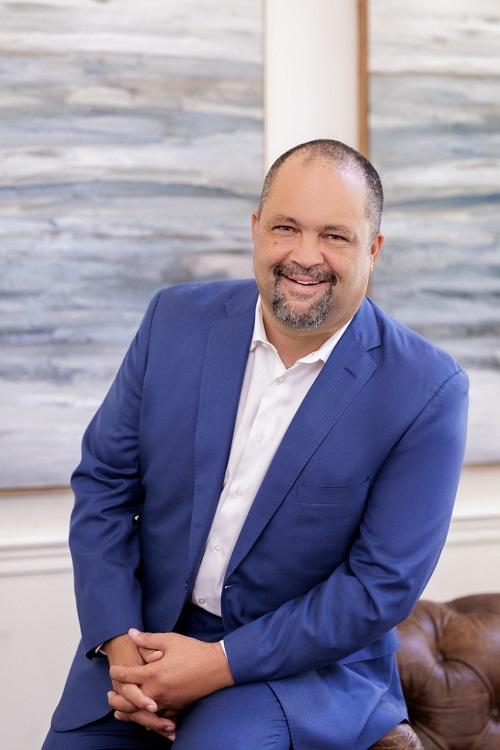
Ben Jealous is a professor of practice at the University of Pennsylvania and former president and CEO of the NAACP.
About The Author