By Professor Earl N. Caldwell, II
Welcome to Global Conversations With The Fly Prof. In this edition, you will meet two dynamic women who are making their presence felt in distinct areas of the law while creating meaningful impact for students. One is helping to shape the next generation of lawyers, while the other is supporting and empowering student-athletes through her work.
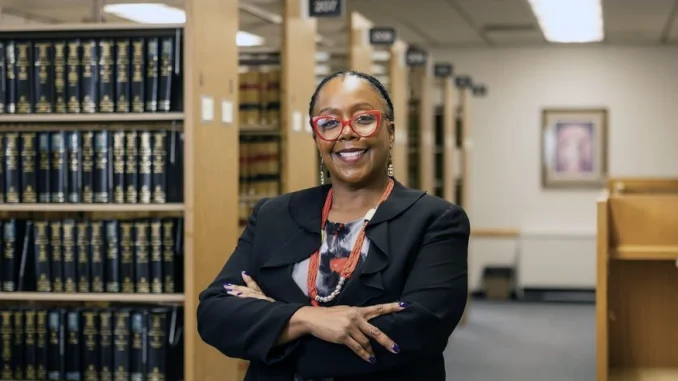
Zelda B. Harris is the Dean of Western New England University School of Law in Springfield, Massachusetts.
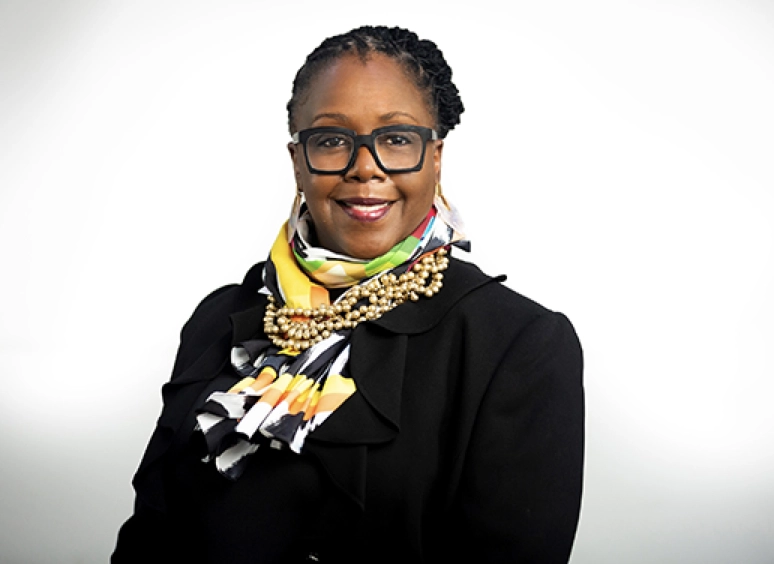
Dean Zelda B. Harris Western New England University School of Law
Ms. Harris’ journey to becoming a dean began with a deep-rooted passion to serve the less fortunate. That foundation was shaped by her family of educators, whose path took them from Princeton, New Jersey, to Charlottesville, Virginia, to Baton Rouge, Louisiana, and ultimately to West Newton, Massachusetts.
After graduating from high school, she attended Syracuse University with aspirations of pursuing a career in journalism. However, her interest in the law emerged during her senior year, when she completed an internship in upstate New York at a legal aid office. While working alongside a family law attorney and interviewing clients, everything began to come into focus.
In that moment, she realized, “This is the coolest job ever.” That experience inspired her to take the Law School Admission Test and ultimately pursue a legal career.
The power of her legal aid experience in New York and the passionless corporate summer legal internships during law school influenced the job she looked for after graduating from Washington University School of Law in St. Louis, Missouri. In the fall of 1991 after studying for and passing the Illinois Bar, Ms. Harris started her legal career at the Land of Lincoln Legal Assistance Foundation in Alton, Illinois and currently referred to as Land of Lincoln Legal Aid.

She considers herself fortunate to have had that experience at Land of Lincoln, which serves a broad region of southern Illinois—an area that is largely rural, predominantly white, and economically challenged. Working in the legal aid space meant operating with limited resources, particularly during a time before smartphones and virtual platforms like Zoom.
As a result, much of her client preparation took place over the phone, with many clients meeting her for the first time at their hearing or trial. Those initial encounters were often marked by a sense of shock and surprise, as her clients did not expect to see a young Black attorney representing them.
While there was sometimes initial tension, it was often followed by a moment of clarity—if they wanted an attorney to represent their interests, she was the one standing beside them. Over time, that reality helped build trust and reinforced the importance of her role as both an attorney and a representative of access to justice.
Ms. Harris reflects that her experiences at Land of Lincoln Legal Aid taught her how “to negotiate, communicate, and connect across different people, different cultures, and differences at all levels.” Her work often placed her in environments that were unfamiliar and, at times, uncomfortable. She recalls traveling to communities where Confederate flags were displayed on homes or lined the streets, particularly in towns where courthouses sat at the center of daily life.
She understood what those symbols represented and recognized the weight of that reality. Yet, she also knew that if she allowed those circumstances to deter her, she would not be able to fulfill her role as an advocate for her clients. Instead, she chose to confront those challenges directly, remaining focused on her responsibility to represent and serve those who depended on her.
In doing so, she developed not only legal skills, but also the resilience, perspective, and capacity to build trust across difference—qualities that would continue to shape her career and leadership.
In 1993, Ms. Harris transitioned to her next legal role at Northwestern University’s Legal Clinic, where she worked on a MacArthur Foundation grant focused on Reform Justice—an early precursor to what is now known as Restorative Justice. Her work centered on the Cook County Juvenile Court, the oldest juvenile court in the country.
This role marked a significant shift in her client base. She moved from representing rural, predominantly white, and economically disadvantaged clients to serving an urban population that was largely Black and also economically challenged. Many of her clients lived in public housing communities such as Cabrini-Green, Altgeld Gardens, and others throughout Chicago.
The five years at Northwestern were transformative. The experience broadened her perspective and deepened her understanding of the systemic issues affecting different communities, further shaping her approach to advocacy and justice.
It was also during this time that Ms. Harris contemplated other legal areas to pursue, such as going into private practice, public defender or state attorney work. However, working in a clinic attached to a law school, teaching and working with students, and serving clients was where her passion had evolved to and led her the Domestic Violence Law Clinic at the University of Arizona James E. Rogers College of Law in Tucson.
During her 14 years in Arizona, Ms. Harris was involved in all aspects of the law school, not just her clinic. While she received her clinical tenure and worked for clinical faculty to be granted full time faculty status, her client experience grew due to working with Native American communities, cases in tribal courts and sovereign tribal courts; Immigrant populations from Central America and Mexico; and city and county courts in and around Tucson.

The University of Arizona James E. Rogers College of Law
Providing further insight into her work, Ms. Harris explains, “My students and I would interview women—primarily those living in shelters—who were in need of legal representation for matters such as orders of protection, child support, custody, divorce, criminal cases and immigration.”
She emphasizes that the immigration challenges she encountered were not new, noting, “This immigration issue is not new. It is about people being removed without due process. I have been dealing with this since 1998.”
Through this work, Ms. Harris not only provided critical legal support to vulnerable populations but also trained her students to engage directly in complex, real-world legal issues—reinforcing the importance of advocacy, due process, and access to justice.
Even after relocating from Chicago, Ms. Harris maintained strong ties to the city through her continued work with Loyola University Chicago School of Law. During her time in Arizona, she taught in Loyola’s trial advocacy program, contributing to the development of future litigators. In addition, she held several roles with the National Institute for Trial Advocacy, including serving as a faculty member, associate editor, and member of the foundation’s board.
In 2012, Ms. Harris returned to Chicago to lead the Dan K. Webb Center for Advocacy at Loyola University Chicago School of Law. During the interview process, she recognized that while the Center’s programs—mock trial, moot court, and trial practice—were well regarded locally, but they had not yet achieved national prominence.
She made a clear commitment: if selected, she would elevate the Center for Advocacy to national recognition. Within just three years of her leadership as Director, the Center achieved that goal, earning a place among the top 10 advocacy programs out of more than 200 law schools nationwide.
During her tenure at Loyola, Ms. Harris also served as Associate Dean for Academic Affairs and later as Interim Dean, further demonstrating her leadership and commitment to legal education. In 2023, she departed Loyola to assume the role of Dean at Western New England University School of Law, continuing her impact on shaping the next generation of legal professionals.
Ms. Harris reflected on her advocacy experiences and noted that the nature of her work does not often allow her to learn the final outcomes of the cases she has handled. However, with a warm smile, she shared two memorable moments when she learned how things turned out.
In one instance while in a grocery store in Tucson, a woman approached Ms. Harris and shared that she had represented her in a particularly challenging case. The father of the woman’s child was a correctional officer, and a central issue in the case involved efforts to have his weapon removed due to safety concerns. At the same time, doing so raised difficult questions about his ability to maintain his livelihood and continue providing for his child.
Ms. Harris reflected on the seriousness of cases like this, noting that in this area of practice, there are real risks—both for clients and, at times, for the attorneys representing them. She recalled that this was a situation that could have had devastating consequences.
Fortunately, the former client shared a positive outcome: she and her children were doing well, and the child of the correctional officer at that time was now in college. Moments like this served as powerful reminders of the impact of her work and the lives it has helped shape.
In another instance after Ms. Harris returned to Chicago and was starting her new role as Director for the Dan K. Webb Center for Advocacy, she received a call from a woman who she had handled her child custody case. At the time, the woman’s young daughter had been injured under unclear circumstances and was subsequently placed in the care of child services.
The woman went on to share that not only was her daughter doing well, and at time she was in college and thriving—an outcome that deeply resonated with Ms. Harris and served as a powerful reminder of the lasting impact of her work.
During her relatively short time at Western New England University School of Law, Ms. Harris has already made significant strides in enhancing the school’s reputation and performance. One of the most notable indicators of this progress is the improvement in the law school’s national ranking.

Western New England University School of Law
U.S. News & World Report publishes an annual ranking of approximately 200 accredited law schools. Schools ranked between 175 and 200 are typically grouped as “unranked.” In 2025, Western New England University School of Law achieved its first ranking of No. 166. In 2026, the school achieved a ranking of No. 159, a meaningful indicator of the school’s continued advancement. This progress reflects the positive impact of Ms. Harris’ leadership and her commitment to strengthening the institution’s academic profile and performance.
During Ms. Harris’ interview process, officials at Western New England indicated that the law school’s bar passage rate was an area of concern. Once again, she recognized an opportunity to strengthen and elevate an institution.
Drawing on her experience in transforming Loyola’s Center for Advocacy into a nationally recognized program, Ms. Harris approached this challenge with a similar commitment to improvement. Under her leadership as Dean, the law school’s bar passage rate has increased, reflecting her focus on academic excellence, student success, and institutional performance.
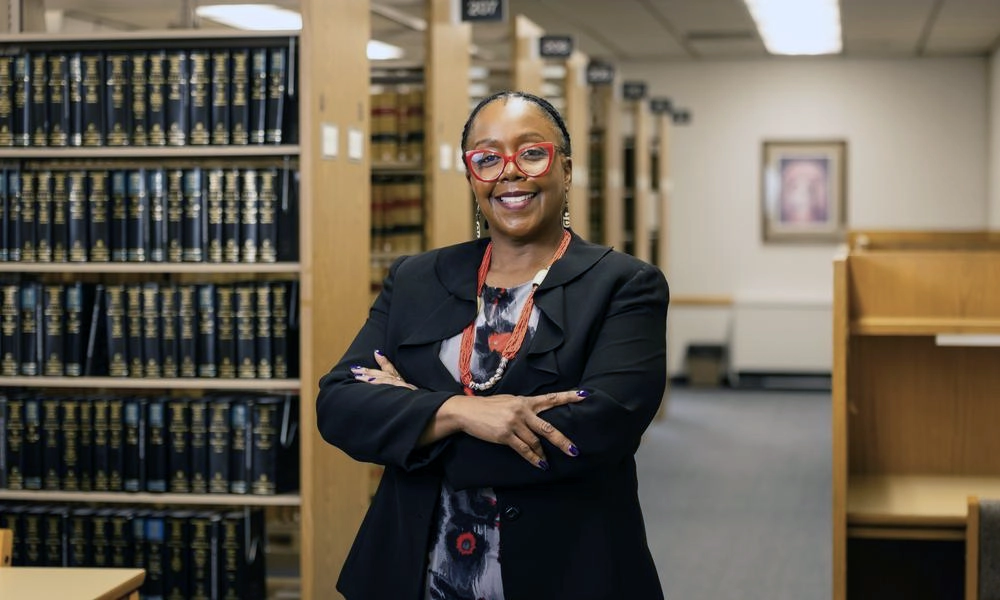
Another significant milestone is the launch of a new innovative part-time, online learning program known as JD Access. This program is designed to expand access to a Juris Doctor degree for individuals who are working professionals, require a non-traditional pathway or may not reside in or near Springfield, Massachusetts.
Following approval from the American Bar Association, which provides accreditation for the school, along with institutional support from Western New England University and the dedicated efforts of the law school’s faculty and staff, the inaugural cohort is scheduled to begin classes in the fall of 2026.
Ms. Harris notes that one key indicator of a law school’s reputation is the level of student interest, particularly the number of applicants seeking admission. Under her leadership, Western New England University School of Law has shown strong signs of continued growth and momentum.
For example, the law school’s open house events typically attract between 20 and 30 prospective students. However, the most recent open house (in reference to this article) was in March 2026 and drew a standing-room-only crowd, filling a classroom designed to hold 90 attendees. In addition, applications to the law school have increased by 64%, further reflecting the rising interest and enhanced reputation of the institution.
Ms. Harris also takes great pride in the Student Professional Development Travel Fund, which provides students with opportunities to participate in competitions, attend professional conferences, and engage in valuable networking experiences.
When asked about her thoughts on Artificial Intelligence (AI) and the law, Ms. Harris shared:
“I’m excited about AI. I’m not really fearful of that. I think it’s great. Just like COVID that changed everything in education and how we work as a society and how we connect to one another. That’s going to happen with AI. I like being in a space and time that you can actually participate in generational change. I mean I love that. I think that’s the coolest thing, and how that is going to play out for lawyers and how we are going to adapt. I think JD Access is adapting to what the future is going to be. Obviously, change is hard, but I am interested in learning how. Technology can help us eliminate or at least reduce bias, reduce inequity and reduce a sense of lack of belonging. I think it’s going to be hard to get there, but I’m excited to see how it all plays out.”
Ms. Harris’ advice to young people is simple: “to persist.” She recognizes that at ages 22 or 25, it is natural to feel uncertain about one’s career path and whether the right decisions are being made. However, she believes that persistence will provide the guidance and support needed to navigate those uncertainties and ultimately succeed in one’s endeavors.
You can find more information about Western New England University School of Law at:
Kristina Minor’s journey to a prominent law firm in Chicago, where she works in the Name, Image, and Likeness (NIL) legal space, began with her passion for and talent in tennis while growing up in a Chicago suburb. NILcame into existence in July 2021, following the U.S. Supreme Court’s decision in NCAA v. Alston, student athletes have been permitted to receive financial compensation for the use of their name, image, and likeness.

Upon graduating from high school, Ms. Minor attended the University of Illinois at Urbana-Champaign, where she played tennis for four years. While she loved the experience, her journey was not without its challenges. One of the first came before she even arrived on campus—the coach who had recruited her left the program in July, just one month before she began in August.
Fortunately, the transition proved to be a positive one, as the new coach was someone she already knew from the junior tennis circuit, providing a sense of familiarity and stability during an otherwise uncertain time.
Ms. Minor recalls that during her freshman year at the University of Illinois, the team won only one Big Ten match. Over the course of her remaining years, however, the program began to evolve through perseverance, hard work, and resilience. Despite facing injuries and the demands of developing both individual and team performance, the experience was strengthened by the camaraderie among her teammates.
Ms. Minor attended the University of Illinois on a tennis scholarship, and that support represented the full extent of the benefits available to her as a student-athlete. This was the pre-NIL era, when there were no opportunities to earn income from the use of one’s name, image, or likeness, and transferring between programs was far less common or accessible than it is in today’s collegiate environment.
Instead, the focus remained on personal development, commitment to the team, and collective growth within the program. That dedication ultimately paid off. By the time she graduated, the team had risen into the Top 25 in NCAA Women’s Tennis, a testament to the group’s work ethic and shared determination.

Kristina Minor Competing On the University of Illinois Champaign-Urbana Women’s Tennis Team
Ms. Minor reflects on the attributes and value of playing sports:
“You learn time management and resilience, and you learn how to deal with failure. You learn how to push yourself beyond your comfort zone and perform under pressure. I believe those experiences made me a better adult and working professional. I’m not sure those things can truly be taught in a school.”
Upon graduating from the University of Illinois, Ms. Minor attended Marquette University Law School, drawn by its strong Sports Law curriculum. As a psychology major at Illinois, she had already developed an interest in understanding and addressing human behavior and challenges—essentially, solving people-centered problems.
She recognized that the legal profession similarly involves navigating and resolving complex issues affecting individuals and organizations. Focusing on sports law allowed her to apply that perspective within an industry she already knew and loved. Viewing sports through a legal lens proved to be a natural fit, aligning her academic background, personal interests, and professional aspirations.
Ms. Minor quickly realized that law school was not centered around the type of creative writing she had initially envisioned, but rather required a far more structured and analytical approach. At the same time, she discovered that she did not enjoy public speaking, which made the prospect of litigation—arguing cases before a judge—less appealing.
This realization was sobering, as it prompted her to reassess her interests and begin identifying alternative paths within the legal profession that better aligned with her strengths and preferences.
Marquette offered a wide range of internships, externships, and professional development opportunities that helped shape Ms. Minor’s path. During the summer between her first and second years of law school, she worked in a Small Claims Mediation Court, an experience she found both engaging and rewarding.
Through this role, she developed a strong interest in Alternative Dispute Resolution (ADR). For Ms. Minor, ADR provided a more collaborative and solutions-oriented approach—allowing parties to resolve disputes in a roundtable, discussion-based environment, rather than through the adversarial nature of traditional courtroom litigation.
For one semester, Ms. Minor participated in an externship with Nike, where she gained experience working across its sports, marketing, and legal departments. This opportunity provided her with valuable exposure to the intersection of business, branding, and law within the global sports industry.
As a former student-athlete at the University of Illinois—a Nike-sponsored school—she believed this experience might create a pathway to employment with the company after graduation. However, she later learned that Nike did not typically hire recent law school graduates directly, which required her to reassess her post-graduation plans and explore alternative paths within the sports and legal industries.
Ms. Minor’s time at Nike coincided with a major moment in sports history. Lance Armstrong, a cyclist who had won the Tour de France seven consecutive times from 1999 to 2005, became the subject of a high-profile investigation. Around the time of her internship in 2012, the United States Anti-Doping Agency concluded that Armstrong had used performance-enhancing drugs. As a result, he was stripped of his titles and received a lifetime ban from competitive cycling.
During this period, Ms. Minor witnessed firsthand the business and legal implications of such developments. Nike, which had been a major sponsor of Armstrong prior to the allegations, moved quickly to distance itself. She recalled the striking image of the company “carting off all of his stuff,” a moment that underscored the realities of brand protection, reputational risk, and the intersection of sports, law, and business.
Upon graduating from law school, Ms. Minor began her career as a postgraduate intern with the National Collegiate Athletic Association (NCAA) National Office. During her time there, she distinguished herself through her work on enforcement matters, processing a high volume of Level III cases (“breaches of conduct” that typically involve minor, technical, or inadvertent violations that provide little or no competitive advantage.)—a record that, notably, continues to be pursued by current interns.
While her command of and productivity in enforcement cases were exceptional, her supervisor encouraged her to gain a broader perspective by spending time on a college campus. This guidance was intended to deepen her understanding of how NCAA rules and enforcement decisions directly impact student-athletes and athletic programs in practice.
When she transitioned to working on campus, Ms. Minor encountered what she described as “pure chaos”—and she found that she genuinely enjoyed it. The experience provided a valuable perspective, revealing that what is outlined on paper does not always translate seamlessly into real-world application.
By engaging directly with student-athletes and administrators, she gained a deeper understanding of the day-to-day realities within athletic programs. This insight made her more informed and ultimately more effective in her work at the NCAA, allowing her to better appreciate how policies and enforcement decisions impact those on the ground.
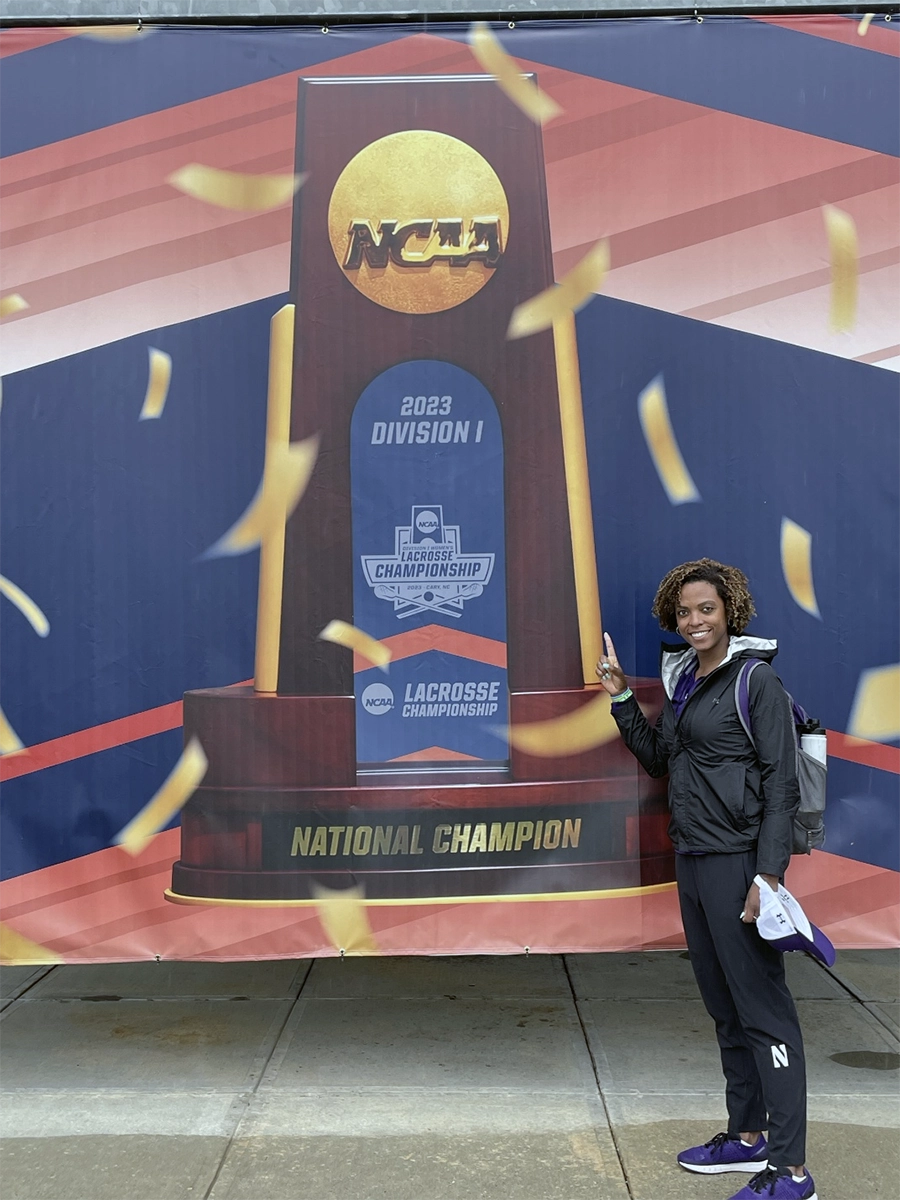
During this time, Ms. Minor took advantage of a professional development opportunity to gain insight into how her home conference, the Big Ten, operated and conducted its business. Through a contact of a contact, she was able to coordinate a series of informational interviews.
At the end of the day, she met with the Director of Compliance, who mentioned that a position for Assistant Director would soon be posted and encouraged her to apply. This interaction proved to be a pivotal moment, opening the door to the next step in her career.
Ms. Minor shares this story with her students:
“I got the Big Ten job and I wasn’t looking for it because it didn’t exist. I went for professional development, but I did my research, asked good questions, formed good relationships and someone gave me a heads up on the way out the door. The job was posted a few weeks later, I applied, interviewed and got the job.”
Ms. Minor continued her professional journey with a four-year tenure at Rutgers University Athletics, during which she also earned her Master of Business Administration (MBA), further strengthening her business and leadership skill set.
She then returned home as the Head of Compliance at Northwestern University Department of Athletics & Recreation, a move once again facilitated through the strength of her professional network. A former Big Ten contact who had transitioned to Northwestern informed her that he was preparing to retire and encouraged her to apply because he felt she would be good overseeing the office at Northwestern.
Once again, her experience underscored a key lesson: relationships matter.

A combination of determination, tenacity, and a broad, multidisciplinary skill set has led Ms. Minor to her current role as Senior Counsel at Husch Blackwell. Her experience has required her to navigate complex situations where clear answers are not always readily available, demanding thoughtful analysis, practical problem-solving, and relationship building and management.
She has also balanced the importance of providing strong client service while operating in roles that could significantly impact student-athletes and athletic programs. Her work has required a comprehensive understanding of the collegiate athletics ecosystem, including recruiting, compliance, and the diverse needs of administrators, coaches, and student-athletes.
The culmination of Ms. Minor’s experiences—as a student-athlete, at the conference level, with the NCAA, and within collegiate athletics both before and after the emergence of NIL—uniquely positions her to advise higher education clients on athletics-related compliance and the evolving NIL landscape.
As a graduate of a Wisconsin law school, Ms. Minor was eligible to practice law in Wisconsin without taking a bar examination through the state’s diploma privilege. As a result, reciprocity was not available for her to gain admission to the Illinois Bar.
Although she could have worked in a more limited capacity at Husch Blackwell, Ms. Minor was determined to have full access to all opportunities available in her role. With that goal in mind—ten years removed from law school—she made the decision to prepare for and take the Illinois Bar Examination.
Drawing on her student-athlete mindset of discipline, preparation, and perseverance, Ms. Minor approached the process with focus and determination. The bar preparation course spanned 12 weeks, and she framed it as she would a competitive season—telling herself, “This is three months, just like preparing for a competition.”
Relying on the same habits that guided her athletic career, she created a structured schedule, committed to the work, and remained consistent throughout the process. On her first attempt, she passed and was sworn in to the Illinois Bar in April or May 2025.

At Husch Blackwell Ms. Minor’s work includes athletics compliance reviews, NCAA infractions, student athlete eligibility waivers, Title IX questions, policy and procedure revisions, and various hot topics in university athletics, such as NIL.
Ms. Minor shares these final words-
”Be brave, be bold and do the job…”
You can find more about Ms. Minor at https://www.huschblackwell.com/professionals/kristina-minor
If you have comments, suggestions, or ideas for future topics or individuals to feature in the upcoming editions of Global Conversations, I’d love to hear from you.
Prof. Earl N. Caldwell II
The Fly Prof.
theflyprof5@gmail.com
About The Author