
by Randall K. Johnson
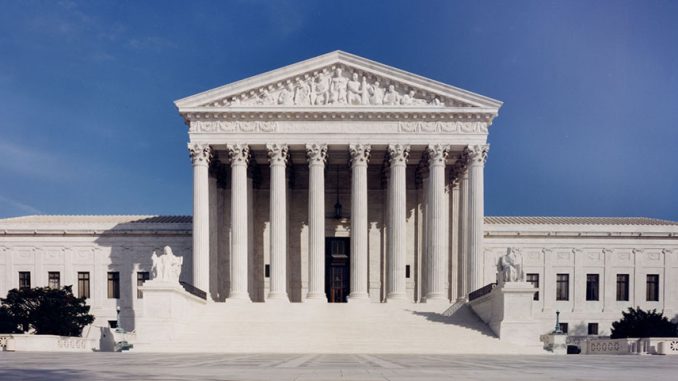
The United States Supreme Court’s landmark decision in Loper Bright Enterprises v. Raimondo marks a profound turning point in administrative law. By overturning the long-standing Chevron deference doctrine—established in Chevron U.S.A., Inc. v. Natural Resources Defense Council, Inc.—the Court has fundamentally reshaped the balance of power between federal agencies and the judiciary.
For four decades, Chevron required courts to defer to reasonable administrative interpretations of ambiguous statutory provisions. In practice, this meant that judges were often constrained from substituting their own legal judgment for that of administrative agencies, even when those agencies were accused of stretching or misapplying statutory authority. With Chevron now dismantled, courts have reasserted their constitutional role as the final arbiters of statutory interpretation.
This doctrinal shift opens the door to renewed scrutiny of governmental decision-making. Contemporary courts are no longer bound to reflexively uphold agency interpretations simply because ambiguity exists. Instead, they are free—indeed obligated—to independently determine what the law means. While critics warn that judges may lack technical expertise in highly specialized regulatory domains, the potential benefits of increased judicial oversight are significant.
One such benefit is the revitalization of challenges to arbitrary and capricious agency action. In recent years, meaningful challenges were comparatively rare, not necessarily because agency conduct was beyond reproach, but because Chevron often foreclosed judicial second-guessing. Now, litigants may pursue claims that previously would have been dismissed at the threshold of deference.
This development is especially relevant to concerns raised about the Missouri Commission on Human Rights (MCHR) and Civil Rights Equal Opportunity Kansas City (CREO). Both entities are charged with enforcing the Missouri Human Rights Act (MHRA), which prohibits unlawful discrimination in public accommodations and forbids aiding and abetting discriminatory practices. Yet critics allege that these agencies have, at times, failed to adhere to the very statutes they are sworn to enforce.
Recent litigation—including McClendon v. Missouri Commission and Johnson v. City of Kansas City—has raised questions about whether MCHR and CREO have acted with the rigor and impartiality demanded by law. In these cases, the agencies stand accused not merely of administrative missteps, but of conduct that allegedly shields alleged tortfeasors rather than fully investigating claims of discrimination. Businesses such as Minsky’s Pizza, Osteria Il Centro, and American Food and Vending Enterprises, Inc. have been named in connection with these disputes, underscoring the real-world stakes for victims seeking redress under the MHRA.
The broader implication of a post-Chevron landscape is not simply that more lawsuits may be filed. It is that public institutions—knowing their interpretations and enforcement decisions will be subject to meaningful judicial review—may be incentivized to more faithfully comply with governing statutes. Scofflaw governmental actors may become less inclined to pursue frivolous defenses or procedural maneuvers if greater public disclosure and judicial examination become more likely outcomes.
Perhaps most importantly, the intended beneficiaries of civil rights protections—particularly victims of racial discrimination—may gain renewed confidence in the legal system. When courts exercise independent judgment, administrative agencies are reminded that their authority is delegated, not absolute. Transparency and accountability are not obstacles to governance; they are its foundation.
The demise of Chevron does not herald chaos. Rather, it restores the judiciary’s constitutional responsibility to say what the law is. In doing so, it strengthens one of the most powerful tools available to citizens: the public sector lawsuit. As recent cases demonstrate, litigation remains an essential mechanism for detecting, deterring, and correcting governmental overreach.
All is not lost in a post-Chevron world. If anything, greater accountability may arise—not through new legislation, but through more deliberate and courageous use of the remedies already available. Judicial review, properly exercised, ensures that administrative agencies serve the public interest rather than insulate themselves from it. That principle is not radical. It is constitutional.

Randall K. Johnson is the lead plaintiff in Johnson v. City of Kansas City. He also is a Professor of Law at the University of Missouri at Kansas City School of Law. For more on Johnson’s pending case, and the benefits of public sector litigation, please read his 2026 law review articles at Digital Commons: Powered By BePress (2012-Present).
About The Author