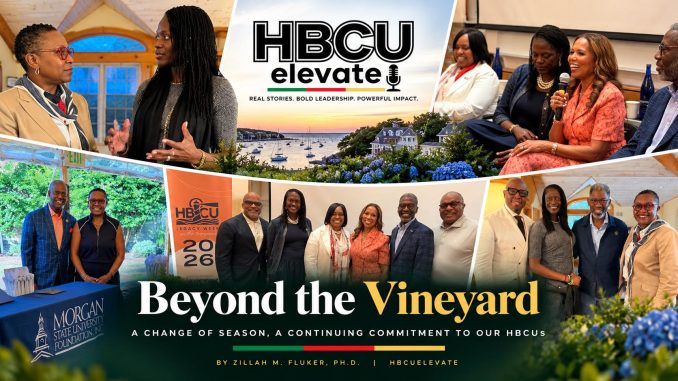

Beyond the Vineyard: A Change of Season, A Continuing Commitment to Our HBCUs
Reflections on alumni engagement, institutional momentum, and the power of community.
By Zillah M. Fluker, Ph.D. | HBCUelevate
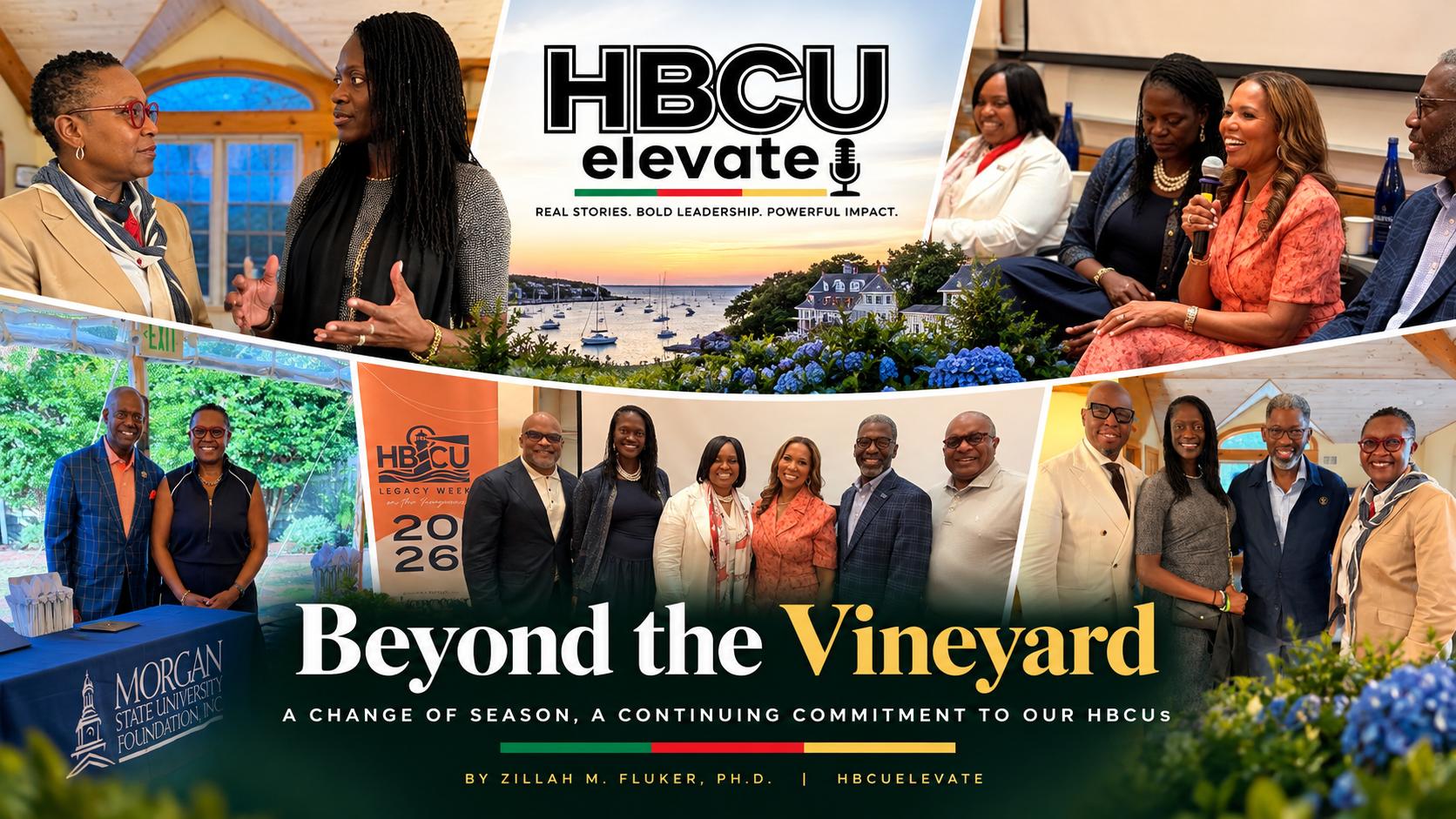
Nearly two months have passed since Martha’s Vineyard, and we have quite literally moved into another season. The warmth and leisurely pace of summer have given way to cooler temperatures, the energy of a new academic year, and the familiar excitement of HBCU football and homecoming. I appreciate the benefit of that time and distance. What initially stood out as meaningful conversations among presidents, alumni, philanthropists, and advocates has taken on greater significance as we watch another academic year unfold.
Our students have returned to campus, several HBCUs are reporting encouraging enrollment gains, and alumni are gathering again, this time on the campuses that shaped their lives.
The change in seasons offers an opportunity to consider how the relationships and commitments discussed during the summer translate into meaningful engagement and continued progress for our institutions.
Alumni Engagement Beyond the Vineyard
One example is Morgan on the Vineyard, an initiative led by Greg Jones and his wife, Lauren, bringing together Morgan State University alumni and friends.
I have known Greg for more than 25 years and appreciate their approach to connecting alumni through fellowship, institutional engagement, and philanthropy.
What began in 2018 as a relatively small gathering has evolved into an annual tradition associated with contributions and commitments approaching the million-dollar mark.
The continued participation of Morgan State President David K. Wilson illustrates the value of connecting alumni enthusiasm with institutional priorities.
Having worked in advancement, I recognize the importance of this relationship. Our presidents and advancement teams carry considerable responsibility, but alumni initiative can complement institutional leadership in ways that extend beyond formal fundraising campaigns.
Greg’s perspective reinforces a principle worth remembering: meaningful support is not defined exclusively by the size of a contribution, but also by participation and consistency.
WATCH: My Conversation with Greg Jones — Morgan on the Vineyard and Alumni Engagement
Momentum Across Our Campuses
The fall semester offers encouraging examples of progress across our institutions.
At Benedict College, President Roslyn Clark Artis and her team welcomed 731 new traditional undergraduate students for Fall 2026, the institution’s highest number since 2019. New-student enrollment increased 15.3 percent, while first-time, first-year enrollment grew nearly 30 percent.
Particularly noteworthy is Benedict’s success in attracting male students. Men represent 53 percent of its incoming traditional undergraduate class, following the institution’s announcement that men accounted for 54 percent of overall undergraduate enrollment in 2025.
At a time when Black male participation and success in higher education deserve sustained attention, Benedict’s progress is encouraging. Its Black male success initiative, supported by The Boulé Foundation, further connects enrollment momentum with mentoring, persistence, and preparation beyond graduation.
At Johnson C. Smith University, President Valerie Kinloch and her team are similarly advancing efforts around academic achievement, student development, and institutional growth.
JCSU’s Becoming Kings initiative welcomed 20 incoming young men into a seven-week experience focused on academics, leadership, and mentorship. The university has also reported more than $1 million in annual alumni contributions for eight consecutive years.
These developments reflect the importance of connecting enrollment, student success, philanthropy, and institutional leadership.
Community, Connection, and Sankofa
My conversation with President Kinloch during HBCU Legacy Week offered another perspective on intentional engagement. She spoke about building community, preserving Black history and culture, and creating opportunities for collaboration that extend beyond traditional institutional boundaries.
That evening, Charlotte resident Walt Frye, founder and CEO of Inkwell Tides, graciously opened his Martha’s Vineyard home to President Kinloch, JCSU alumni, and invited guests for an intimate gathering centered on Sankofa, the principle of looking back to move forward.
Although not a JCSU alumnus, Walt, whose family has a longstanding Vineyard history, exemplified the broader community of relationships and supporters our HBCUs can cultivate.
President Kinloch emphasized the importance of bringing together people whose experiences, expertise, and connections can contribute to sustainable investment in our institutions.
Her message was particularly relevant: we cannot advance this work without being in community with people who understand the importance of investing in our HBCUs.
Homecoming and the Opportunity Ahead
We are now in one of the most anticipated seasons on the HBCU calendar.
Homecoming.
The football games, bands, reunions, and traditions remind us of the distinctive relationships our institutions cultivate. As an HBCU graduate, I understand the sense of belonging that brings us back year after year.
But homecoming also presents an opportunity to extend that connection beyond a single weekend.
What if more of our enthusiasm translated into year-round giving, student mentoring, internships, professional connections, and institutional partnerships?
What if we continued expanding the ways alumni and friends can contribute, recognizing that meaningful engagement may begin with a modest recurring gift, a professional introduction, or a commitment to support a student?
The efforts of alumni leaders like Greg Jones, alongside presidents, community partners, and institutional teams, remind us that advancing our HBCUs is a shared responsibility.
Beyond the Vineyard: Turning Connection Into Commitment
As I reflect on the summer, I remain appreciative of the conversations and relationships the Vineyard made possible. But I am equally encouraged by what we are witnessing across our campuses this fall.
Enrollment momentum at Benedict, student success initiatives at Johnson C. Smith, and alumni engagement through Morgan on the Vineyard remind us that progress takes many forms. It also requires vision, investment, and sustained collaboration.
Having served our HBCUs in several capacities, I know the work is complex, but I also know the extraordinary possibilities when we align our resources, relationships, and commitment.
So, as we celebrate homecoming, reconnect with classmates, and cheer from the stands, let’s challenge ourselves to do one more thing: Make a commitment that lasts beyond the weekend. Give consistently. Mentor a student. Open a professional door. Introduce a potential partner. Find a way to contribute that reflects both your capacity and your commitment.
The Vineyard may have been where we gathered, but our campuses are where the work continues.
The season has changed. Now let’s turn our connections into commitments and our commitments into lasting impact for our HBCUs.
About
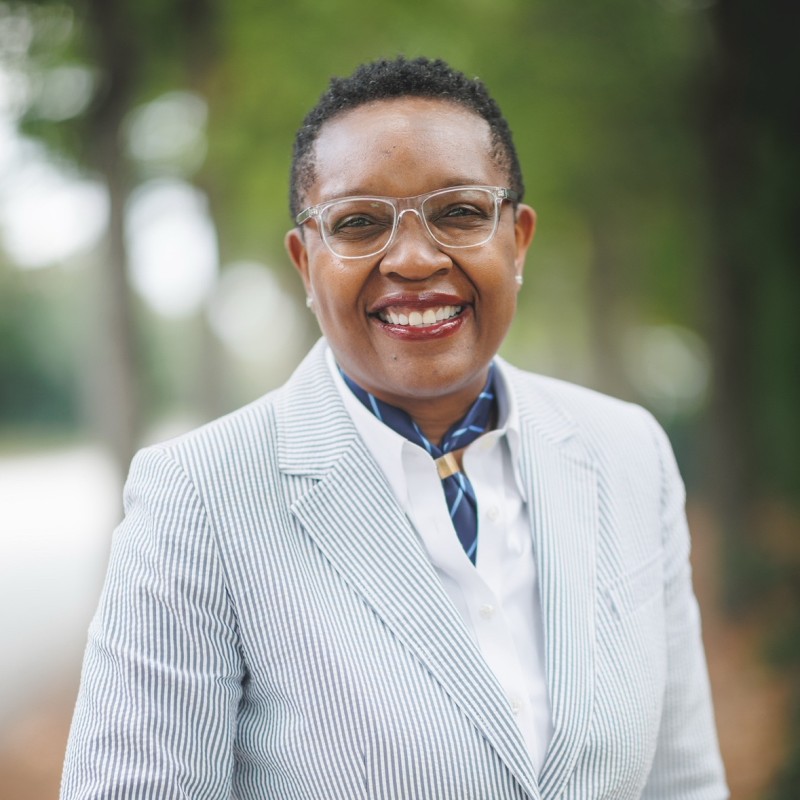
Zillah M. Fluker, Ph.D., is an organizational leadership and higher education executive and philanthropy advisor with experience spanning HBCUs and Fortune 100 corporations. She is the founder of activate|elevate, LLC, advising organizations on philanthropy, leadership, and institutional advancement. A former vice president for institutional advancement at three HBCUs, she currently serves as Vice Chair of the Barber-Scotia College Board of Trustees and leads HBCUelevate.
About The Author