
By staff
For more than two decades, Taroue W. Brooks has championed African American art not simply as a collector, but as a cultural steward committed to preserving the stories, brilliance, and legacy of Black artists. As co-producer of Painting in the Spirit alongside acclaimed artist Dr. Thomas E. Lockhart III, Brooks expands his role beyond collecting into authorship, writing his first foreword while helping shape a publication that is as much a historical document as it is a stunning coffee table book. In this conversation, he reflects on the responsibility of preserving culture, the importance of building generational wealth through art, and why documenting Black creativity remains one of the most powerful investments we can make in our future.
As someone who has spent decades collecting works by African American artists and artists of color, what made this the right moment to help bring Painting in the Spirit to life as a coffee table book?
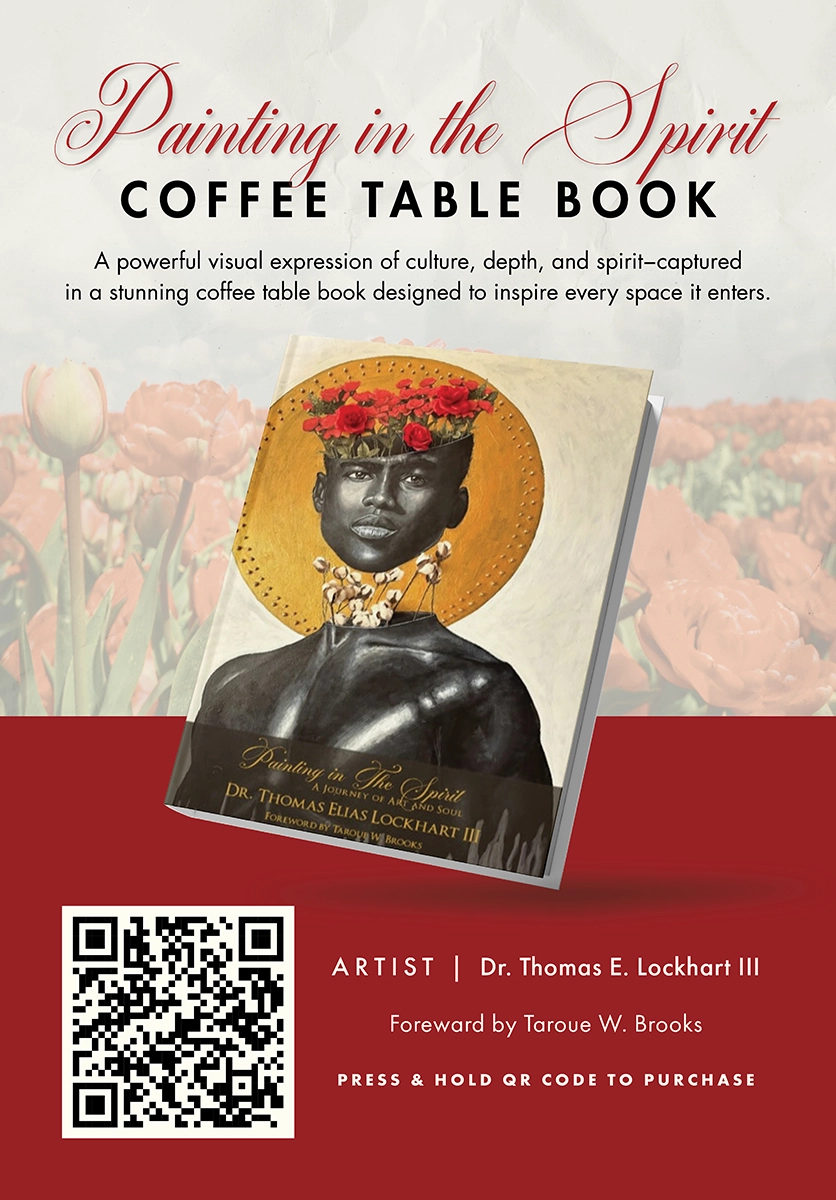
Dr. Thomas E. Lockhart III is an extraordinary artist whose work possesses both artistic excellence and cultural significance. I recognized an opportunity to elevate not only his creative legacy but also the way his work could be experienced and appreciated by a broader audience. This coffee table book became the ideal vehicle to accomplish that vision.
Equally important, I wanted Painting in the Spirit to inspire others to become collectors. Collecting African American art is about far more than acquiring beautiful objects; it is an investment in culture, history, and generational wealth. Art preserves our stories, celebrates our lived experiences, and continues to appreciate in both cultural and financial value. It is a legacy that continues to give long after it is acquired.
You’ve long been known as a collector and cultural steward, but this project marks your debut as a published writer with your first foreword. What emotions did you experience as you found your voice on the page, and what did you hope readers would feel before turning to the first chapter?
Writing the foreword was both a privilege and a deeply personal milestone. It gave me the opportunity to reflect on my own journey as a collector and share the experiences that shaped my passion for African American art.
My hope is that readers see themselves somewhere within those pages. Every journey has value, and every person deserves the opportunity to discover art that speaks to their spirit while also becoming part of their family’s legacy. I also wanted to encourage readers to become students of the art world—to learn about the artists, understand the industry, and appreciate the cultural significance behind every work they encounter. Knowledge enriches the collecting experience and transforms ownership into stewardship.
Your relationship with Dr. Thomas E. Lockhart III extends beyond collector and artist. How did that trust and mutual respect shape the vision, storytelling, and overall direction of this book?
From the very beginning, we shared one unwavering goal: to produce the finest coffee table book possible. Every decision was guided by mutual respect, trust, and a shared commitment to excellence.
I believe this project also demonstrates something profoundly important—that two Black men can collaborate with integrity, purpose, and genuine respect to create something extraordinary. My objective was to help elevate Dr. Lockhart’s brand while honoring the remarkable body of work he has spent decades creating through faith, discipline, and unwavering dedication to his craft.
The quality of this book was never negotiable because we understood its significance. We wanted it to serve not only as a celebration of Dr. Lockhart’s artistry but also as a lasting contribution to our cultural landscape.
Many people see art simply as something beautiful to display. You often speak of art as history, identity, and legacy. How does Painting in the Spirit invite readers to see African American art through a more meaningful and transformative lens?
Art is one of our most powerful storytellers. It reflects our humanity, preserves our family traditions, and captures the lived experiences that define who we are. Every painting carries a narrative that extends far beyond the canvas.
What makes Painting in the Spirit especially meaningful is that it offers readers something rarely experienced—the opportunity to understand the artist behind the work. Through Dr. Lockhart’s reflections and creative journey, readers gain a front-row seat into his inspiration, vision, and purpose. That deeper connection transforms the viewing experience and reminds us that great art is not simply seen; it is understood, felt, and remembered.
As co-producer, you had the responsibility of preserving not only extraordinary artwork but also the story behind the artist. Why was it important for this book to document Dr. Lockhart’s creative journey for future generations?
There are countless gifted artists whose stories are never fully documented because they lack the resources, opportunities, or support to preserve their legacy. I never wanted that to be Dr. Lockhart’s story.
His journey is one of unwavering faith, perseverance, sacrifice, and resilience. Success is never accidental—it demands patience, discipline, and a willingness to remain adaptable while pursuing one’s purpose. We wanted this book to document not only the artwork but also the man behind it, ensuring that future generations understand both the creative brilliance and the determination required to build an enduring legacy.
If these pages inspire even one person to believe more deeply in their own gifts, then we have accomplished something truly meaningful.
The foreword reads as both a personal reflection and a cultural statement. What message were you most intentional about leaving with collectors, aspiring collectors, and anyone who has yet to discover the power of African American art?
While the beauty of art may first capture our attention, understanding the art world is what transforms appreciation into purpose. I wanted readers to recognize that collecting African American art is an act of cultural preservation and ownership.
We have a responsibility to support and preserve the works that chronicle our history, celebrate our perspectives, and affirm our contributions to society. Every acquisition becomes part of a family’s legacy and a tangible investment in preserving the richness of our culture for generations to come.
This book is more than a celebration of one artist—it is a testament to the importance of preserving Black creativity. What do you hope Painting in the Spirit contributes to the broader conversation about representation, legacy, and cultural preservation?
For far too long, we have sometimes underestimated the extraordinary value of our own cultural contributions. Black creativity has shaped every aspect of American culture and continues to influence the world in profound ways.
Painting in the Spirit serves as both a celebration and a historical record. It reminds us that preserving our stories is our responsibility. Documentation becomes the evidence—the receipts—for future generations to understand who we were, what we created, and how we transformed the world. Our responsibility is not simply to remember history but to ensure it is accurately preserved and passed forward.
Looking ahead, how has producing Painting in the Spirit expanded your own vision as a collector, storyteller, and cultural ambassador, and what legacy do you hope this project leaves for generations to come?
Producing this book has strengthened my confidence and affirmed that meaningful ideas can become enduring realities when pursued with vision and commitment. It has also reinforced my desire to expand the educational impact of my own collection.
One of my greatest aspirations is to present The Pinkie L. Brooks-Jones Collection, named in honor of my mother, on the campuses of Historically Black Colleges and Universities. My hope is to educate, inspire, and introduce students to the cultural and economic significance of collecting African American art.
Ultimately, I want this project to remind people that legacy is not something we leave by chance—it is something we intentionally create. Painting in the Spirit is one chapter of that journey, and I look forward to continuing the work of preserving our stories, celebrating our artists, and ensuring that future generations inherit not only our history but also the confidence to create their own.
About The Author