
By Hazel Trice Edney
How much would you have bet on Rosa Parks moving to the back of the bus? This is the kind of information that Kalshi, a U. S. prediction market, wants to know.
For America’s 250th birthday, the market platform rolled out an ad campaign inviting the country to ridiculously and insultingly imagine placing wagers on the color line – a segregation market, if you will.
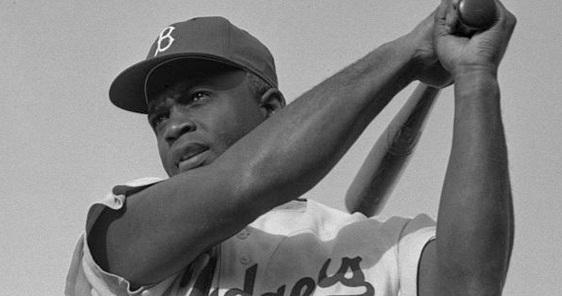
The centerpiece of the campaign, which Kalshi founder Luana Lopes Lara called her “favorite,” is a 1946 market: Will Baseball End Segregation? Odds: 0%. A Bob Feller quote sneers that even Robinson lacks “the qualities of a big-league ballplayer.” Click forward, and the year turns to 1947. The market, we are told, has “settled.” The color line breaks. Payouts, presumably, are issued.
The romanticization of segregation markets by a multi-billion dollar company currently battling state law enforcement officials is not only a new one but one that is highly insulting to African-Americans who literally built America on our backs, from enslavement through civil rights and beyond.
For America’s 250th anniversary, the company reimagined our nation’s history as a series of gambling questions, each with stylized illustrations. Jackie Robinson’s integration of Major League Baseball is one of them. The image Kalshi chose to accompany it depicts young Black men lounging on a stoop, a baseball tossed in the air like a coin. Some might see it as a pretty picture. It is also, if we are being honest, an obscene and absurd one.
Let me say plainly what this ad asks us to imagine: It asks us to imagine a world in which Americans in 1946 could have logged on and wagered on whether an entire race of ballplayers would finally be allowed to earn a living at their craft. A market in which Branch Rickey’s conscience and Jackie Robinson’s dignity were data points, and the fifteen-to-one vote of white owners to preserve the color line was pricing information. Kalshi asks us to imagine a world in which the question “Will Black men be treated as human beings?” was simply a gaming line you could take action on.
This is not a celebration of history. It is a belittling of our suffering and our achievements thus far.
The company will say I am missing the point, that the campaign honors a country that defied its own worst instincts. But look again at what is actually being sold. Kalshi is not marveling at Jackie Robinson. Kalshi is marveling at the profit that would have been available to any speculator willing to take the “yes” side against a country that hated him.
And there was so much hate, and so much to lose. Robinson received death threats mailed to his home.
He was spiked on the base paths, spat on in the dugout, refused hotel rooms that his white teammates could freely enter. There is no line on a prediction market for what that costs a man. There is no ticker for what it costs the country that made him pay.
Nor is there any accounting, in Kalshi’s tidy timeline, for the Black ballplayers who did not get their April 15th: The men of the Negro Leagues who aged out before the door opened; the pitchers whose arms gave out in exhibition games in Jim Crow towns; the families whose fathers came home from segregated buses too tired to play catch. History did not “settle” in 1947. It shifted, painfully, and left a great many people uncompensated on the losing side of a market they never chose to enter.
I do not object to Kalshi as a business. I object to the instinct – increasingly common in this economy – that treats every human question as a market question, and every market as a stage on which we may now perform the past. The trouble with Ms. Lopes Lara’s “favorite campaign” is not simply that it is offensive, though it is. It is that it reveals a worldview in which nothing is sacred enough to be exempt from the wager.
We are 250 years into this experiment – not counting the 157 years, starting in 1619 and leading up to 1776. Within those 407 years, we should have learned by now that some things must no longer be for sale – including Black dignity.

| Trice Edney Communications | 6817 Georgia Avenue | Washington, DC 20012 US |
About The Author