
By Staff
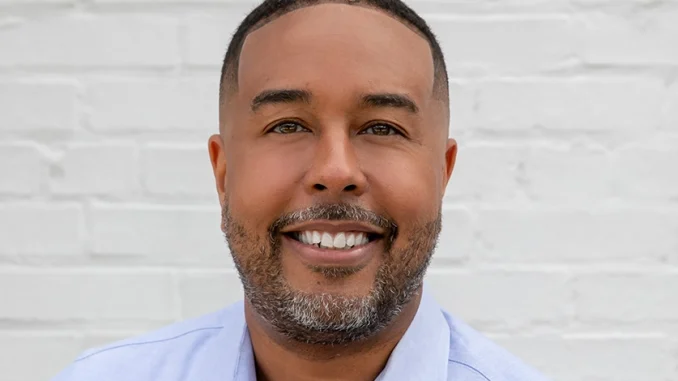
Jonathan Kyle , CEO of Ten Sparrows has never viewed technology simply as a tool. For him, it has always been a language—a way to build, create, solve problems and imagine possibilities beyond the circumstances in front of him. His fascination began as a child in the early 1980s, when his mother brought home a VIC-20 and later a Commodore 64. While she saw the computers as an opportunity for productivity, Jonathan saw something else: a world he could create for himself. By the time he was nine, he had discovered a clever loophole—if he learned to build his own games, his mother could hardly tell him not to play them. That childhood curiosity became a lifelong relationship with software and innovation. Today, through Ten Sparrows, Jonathan is focused on something much larger than technology for technology’s sake: ensuring that as artificial intelligence transforms the world of work, people from diverse backgrounds have the literacy, access and opportunity to participate in shaping what comes next.

Jonathan, every successful venture begins with a vision. What inspired you to create Ten Sparrows, and what personal experiences shaped the mission behind the organization?
Outside of my home, being a Black kid in the South who was deeply interested in computers was not always easy. It was even more challenging for my mother, who was young, single, raising two children and working with very limited resources.
Looking back, I recognize that scarcity probably forced us to become creative in ways we didn’t fully appreciate at the time. I never necessarily felt that I was being driven by the idea that “necessity is the mother of invention.” What I felt was a very strong pull to build, create and innovate. The scarcity around me sometimes felt less like motivation and more like a constraint. I often wonder what I could have built, how much faster I could have learned, or how much further I could have gone if I had access to more resources earlier.
That experience continues to influence how I think about Ten Sparrows. I understand what it means to have the curiosity, ability and ambition to create something, but not necessarily have the circumstances that allow you to do it. Part of our mission is about changing those circumstances for other people.
The name “Ten Sparrows” is both memorable and symbolic. What does it represent, and how does that meaning influence the work you do every day?
My mom actually came up with the name. She was looking out the window into a little garden and noticed seven, eight or nine sparrows. She thought, “Why not ten?” And Ten Sparrows was born.
There is something important in that origin story. It begins with observation, creativity and a little bit of whimsy. Nobody was sitting around trying to create the perfect corporate name. My mother simply noticed something in the world and imagined something a little bigger.
As I learned more about sparrows, I discovered that they carry meaning across cultures and throughout history. They are familiar, resilient, adaptable and often associated with trust, confidence and community. People have found inspiration in them in both practical and spiritual ways.
Those qualities resonate with me. They remind me that innovation does not always have to begin with something grand. Sometimes it begins with paying attention, asking a different question and imagining that there could be one more possibility than what you currently see.
In today’s rapidly changing business and nonprofit landscape, what challenges have you encountered while building Ten Sparrows, and what lessons have proven to be your greatest source of strength?
There is a kind of “prion disease” affecting business, political and social behavior that seems increasingly pervasive—and, unfortunately, it feels like it has gotten worse through 2026. It is a strange kind of collective behavior that can make rational decision-making and collaboration unnecessarily difficult.
One of our biggest challenges is funding. Fortunately—or unfortunately—we are not new to making a way out of no way. That is a lesson I inherited from my ancestors. When resources are limited, you learn to be resourceful, strategic and persistent.
Another challenge is focus, which is incredibly common for technical founders, particularly in the early stages of building something. The problems are everywhere, and the beautiful thing—and sometimes the dangerous thing—is that we can build almost anything.
The lesson for me has been to constantly seek early feedback from a lot of people, listen carefully, adapt, pivot when necessary and repeat the process. I find tremendous strength in community and in the candid feedback I receive from my “framily.” Sometimes the people who care about you most are also the people willing to tell you the truth.
Your work is rooted in serving others while creating sustainable impact. How do you balance purpose with innovation to ensure your organization continues to grow and meet the needs of the communities you serve?
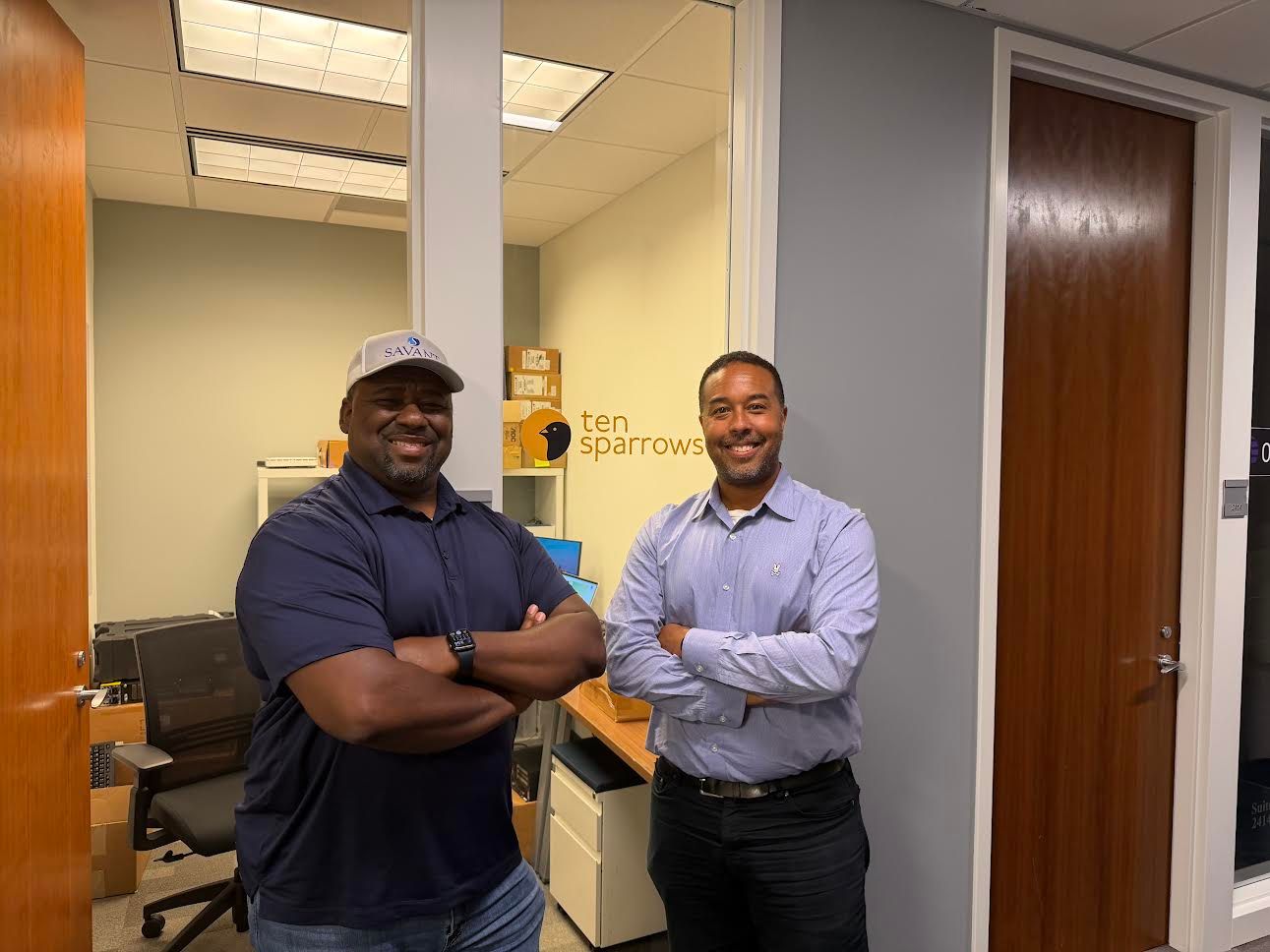
Ten Sparrows is not a typical technology startup. Our objective is not to ruthlessly dominate a niche, eliminate competitors and take over the world. That may be the normalized objective of American business, but I believe that approach can ultimately betray the trust of the very people a company is supposed to serve.
Artificial intelligence is rapidly changing how we live, work and interact. I believe the next phase of that transformation is what I call “Modern Work.”
Access to technology is becoming increasingly pervasive, but literacy is not keeping pace. People may have access to powerful tools without understanding how to use them effectively, responsibly or creatively.
We are not going to solve the entire technology-literacy gap. But innovation gives us an opportunity to ensure that people do not get left behind. For me, sustainable impact means building technology that expands participation rather than simply concentrating power.
Leadership often requires resilience, especially during seasons of uncertainty. How has your leadership philosophy evolved, and what principles guide your decision-making today?
I have come to appreciate a lot of the life lessons distilled from my father. He has always had a funny, witty and profound way with words—simple phrases that somehow carry a tremendous amount of meaning. It reminds me a little of the late Dolly Parton, although my father is considerably less self-deprecating. Maybe it is an East Tennessee thing, but apparently it got passed down to me.
A lot of my leadership philosophy comes out that way. I didn’t necessarily invent these principles, but I use them because they work:
Hire people who balance technical expertise, communication and empathy. Two out of three ain’t bad.
Every dollar has a job.
Look for opportunities where one plus one equals three.
Family comes first. The work will always be there.
Don’t let perfect be the enemy of good.
You gotta break some eggs to make an omelet.
Earth has to move to make a mountain.
That last one is particularly important to me. Meaningful change requires movement. Mountains don’t move overnight, but they do move.
Many aspiring entrepreneurs and changemakers struggle with fear and self-doubt. What advice would you offer to someone who feels called to make a difference but isn’t sure where to begin?
Fear and self-doubt are healthy feelings. They should be honored and respected as part of the entrepreneurial journey. They can tell you that what you’re attempting actually matters to you.
But don’t allow fear to become the reason you never begin.
Do the things you feel strongly about while remaining true and authentic to who you are. Anyone successful who tells you they have never failed is probably lying. Failure is part of the process of learning what works, what doesn’t and what needs to change.
I often think about the idea that the parachute won’t open if you don’t jump. At some point, you have to take the risk.
And ultimately, I would rather have lived and died than never have lived at all. You don’t get to create a meaningful life without taking some chances.
As you look toward the future, what exciting initiatives or partnerships are on the horizon for Ten Sparrows, and what legacy do you hope the organization will leave for generations to come?
I am a strong advocate for open-source initiatives within the software community, and I look forward to opportunities to contribute back so that others can benefit from what we build at Ten Sparrows.
The beauty of open source is that knowledge does not have to stop with the person who created it. Someone else can take an idea, improve it, build upon it and create something none of us could have imagined individually.
Ultimately, I hope Ten Sparrows sparks at least one person who feels that same pull I felt as a kid—to build, create and innovate despite the circumstances around them.
If we can empower that person with the resources and circumstances necessary to make it happen, then we have created something much bigger than software. We have created possibility.
Heart & Soul Magazine celebrates individuals whose work reflects purpose, compassion and excellence. What does living with both heart and soul mean to you personally, and how do you hope your life’s work inspires others?
Technology is disruptive. Throughout history, new technologies have had the ability to change the dynamics of what I think of as the “Wheel of Power and Privilege.” Artificial intelligence has accelerated that possibility dramatically.
What excites me most is what happens when people with diverse life experiences begin using these technologies in ways that only they could imagine. Their perspectives become part of the innovation itself.
I look forward to making a meaningful impact as a positive change agent for Modern Work—building platforms and tools that allow people to use AI, innovate in unimaginable ways and ultimately improve their own lives and the lives of the people around them.
For me, living with heart and soul means remembering that technology is ultimately about people. The greatest measure of what we build isn’t simply what the technology can do. It is what people are empowered to do because that technology exists.
And if someone who never believed they had the opportunity to build, create or innovate discovers that they can—that, to me, is meaningful impact.
Social Media

About The Author